

Why Carbon Fiber Fork Testing Matters
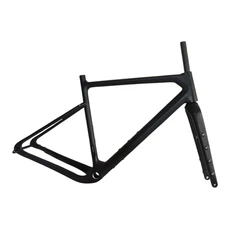
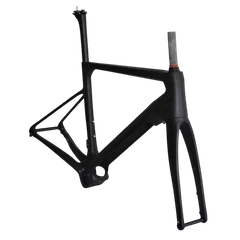
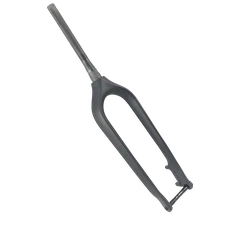
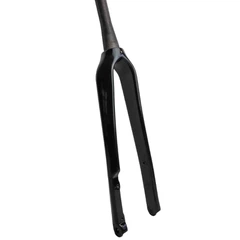
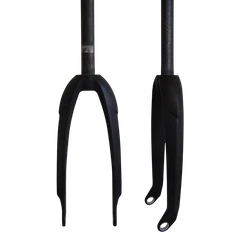
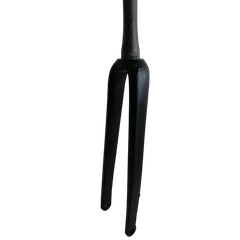
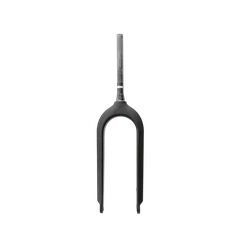
The carbon fiber fork carries steering force, braking load, road vibration, and impact from the front wheel. Although it looks simple from the outside, its performance depends on the steerer tube, fork crown, fork legs, dropouts, and carbon fiber layup structure. If any of these areas are weak, the fork may develop cracks, abnormal deformation, or brake alignment issues during long-term use. By testing the carbon fiber fork before mass production, its stiffness, bending strength, impact resistance, and disc brake load capacity can be evaluated.
Main Carbon Fiber Fork Test Items
CarbonWorld uses several testing methods to check the structural performance of carbon fiber forks before mass production. These tests focus on stiffness, braking load resistance, bending strength, impact resistance, and overall structural strength.

Front Fork Rigidity Test
The front fork rigidity test is used to check the structural response of a carbon fiber fork under controlled force. The test is usually performed with a universal testing machine and helps evaluate whether the fork has sufficient stiffness to support precise steering, stable front-end control, and overall riding stability. Key inspection areas include the steerer tube, fork crown, fork legs, and axle mounting area.
Ask Our Engineer
Fork Disc Brake Test
The fork disc brake test is used to check whether the brake mount area can remain stable under repeated braking force. During the test, the front fork is fixed vertically on a dedicated testing machine, and a fixture is mounted on the disc brake seat to simulate actual riding and braking conditions. A force of 63.3 kgf is applied with up-and-down free movement at a frequency of 3 Hz for 20,000 cycles. After testing, the fork is considered qualified if there is no fracture or visible crack in the disc brake mount, fork leg, or dropout area.
Contact Us


Static Bending Test of Fork
The static bending test checks how a carbon fiber front fork responds under continuous bending load. During the test, the fork is fixed on a dedicated testing machine, and the steerer tube is secured. A 100N pre-load is applied first until a stable reading is obtained. The load is then increased to 1200N and held for 1 minute before being reduced back to 100N to record permanent deformation.
The fork passes the test if no cracks or visible fractures are found, and the permanent deformation does not exceed 5mm.
Contact Us
Impact Test of the Fork
The impact test checks how a carbon fiber front fork responds to sudden force during riding or transportation. During the test, the fork is fixed on a test bench, with the steerer tube secured and a dummy hub installed in the dropouts. A 22.5 kgf weight is dropped from 670 mm onto the center of the dummy hub.
After two impacts, the fork passes if no fractures or visible cracks are found, and the deformation does not exceed 20 mm.
Ask Our Engineer


Strength Test Of The Front Fork
The front fork strength test evaluates the fork's load-bearing capacity under high force. The test is performed with a universal testing machine and recorded automatically. During the test, the steerer tube is fixed, and a dummy hub is positioned at the center of the force point. The load is applied at a test speed of 25.4 mm/min. The fork must withstand more than 200 kgf without structural failure to be considered qualified.
Contact Us
Before Mass Production
Before mass production, each new carbon fiber fork model must go through the required testing process. If one test item does not meet the requirement, we review the structure, layup design, material use, or production process, then test again. Only after all required tests are approved will the fork move to the next production stage.
