



Custom Carbon BMX Forks
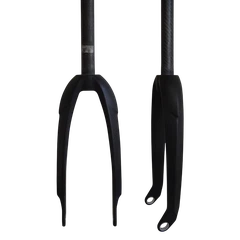
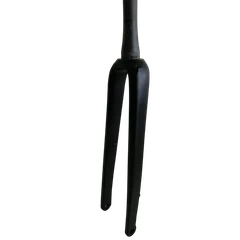
Carbon BMX Fork is a high-performance bicycle component made of carbon fiber. It perfectly combines lightweight design and excellent strength. It is the first choice of competitive BMX riders. The advanced competition-level technology is designed to improve your riding experience and shorten your lap time.
Carbon world is made of rigid carbon fiber materials, such as Toray T700/800/100. We can customize, design, open molds, and mass produce according to your needs. Our own factory guarantees delivery. With a long-term and stable logistics team, the delivery cycle for European and American orders is shortened to 15 days (the industry average is 30 days).
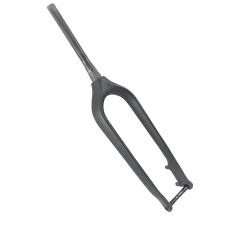
Carbon BMX Forks Technical Specifications

Carbon BMX Forks
•Model: MYB06FK-B001-BMX
Type: Rigid Fork
•Size: 20 inch, 24 inch
•Steer: 1-1\8-1-1\2
•Used For: BMX race
•Finish: Matt / Glossy
•Weight: 430g+/-20g (20"), 510g+/-20g (24")
•Dropout: 20mm thru-axle
Send Inquiry Now

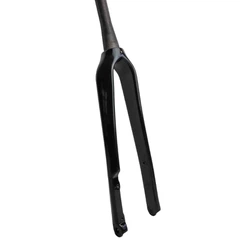
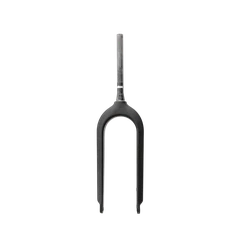
Carbon Fiber BMX Forks
•Model: MYB06FK-B002-BMX
•Type: Rigid Fork
•Size:20 inch / 24 inch
•Steer: Straight tube 1-1\8"
•Fit for: Disc brake
•Used for: BMX race, BMX street, flatland BMX, BMX jumps, BM dirt bike
•Integrated Blade: Carbon woven
•Dropout: Alloy ring
•Finish: 3K,12K, UD
•Weight: 430g+/-20g (20"), 510g+/-20g (24")
Send Inquiry Now

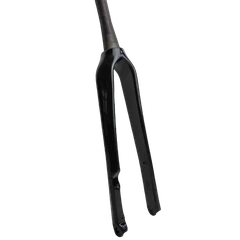
Carbon BMX Forks
•Model: MYB06FK-B003-BMX
•Type: Rigid Fork
•Steerer Tube: 1-1/8" - 1"
•Compatible Bike Type: BMX Mini
•Finish: 3K Matte
•Weight: 350 ± 15g
•Axle: 20mm Quick-Release
•Includes: Embedded insert + Top cap
Send Inquiry Now

Types of Carbon Fiber BMX Forks
1. Standard straight forks feature a classic straight-leg design that's lightweight and stiff. They're perfect for street, park, and regular BMX riding.
2. Tapered-leg forks have legs that taper toward the chainstays, increasing stiffness and reducing weight, making them ideal for riders who want responsive handling without sacrificing durability.
3. Offset forks offer adjustable fork angles for better handling and stability, perfect for riders who need to fine-tune the handling of their bike.
4. Flatland-specific forks are shorter and lighter, with a low offset for precise handling, and are often reinforced to withstand the tricks and stresses of flatland BMX riding.
5. Freestyle/reinforced forks focus on durability and are ideal for high-intensity street or park riding with high impacts.
6. Competition-specific carbon forks prioritize lightweight materials and precision engineering for ultimate speed and handling on the competitive track.
Carbon BMX Fork Drawing


For carbon BMX fork projects, technical drawings help buyers check the fork size before sampling or production. These drawings show key areas such as fork length, steerer tube size, crown shape, blade curve, dropout position, axle area, and tolerance range.
Different BMX fork designs may use different steerer standards, fork leg shapes, and dropout structures. Before ordering, buyers should confirm the wheel size, axle type, steerer diameter, brake requirement, and frame compatibility.
For OEM carbon BMX forks, drawings help confirm custom specifications before mold development or production, reducing fitment issues and improving communication between all parties.
Top 4 Key Benefits of Carbon Fiber BMX Fork
Lightweight: Carbon fiber is much lighter than steel or aluminum, which reduces the overall weight of the bike. Improves maneuverability, rotation speed, and air control
Shock Absorption: Carbon fiber BMX forks can naturally absorb road/trail vibrations better than metal forks. Reduce arm fatigue and improve comfort during long rides or bumpy landings.
Strength and Durability: High-quality carbon BMX forks are impact-resistant, and carbon fiber forks provide the best stiffness-to-weight ratio, improving steering precision.
Aerodynamic and Aesthetic Design: Carbon fiber BMX forks usually have a smooth, streamlined shape that effectively reduces drag and combines a modern, high-tech look.


Carbon BMX Fork Size Inspection
After the carbon BMX fork is molded and finished, key dimensions are carefully checked against the engineering drawing to ensure full production accuracy. This inspection covers multiple critical areas, including the steerer tube diameter and length, dropout width, axle interface area, fork leg spacing, crown alignment, and overall fork length. Each point is measured to confirm that the finished product matches the required tolerances for safe installation and riding performance.
Digital calipers are used for precise small-size measurements, especially on the steerer tube, dropout slots, and axle mounting points. For larger dimensions such as fork leg spacing and overall geometry, dedicated inspection gauges or fixtures are applied to ensure consistency across batches. These measurements help verify that the fork will properly fit the frame head tube, front wheel hub, axle system, and brake configuration before final packing and shipment.
Weight of Carbon BMX Fork
A lightweight carbon BMX fork can be checked by actual weighing during sample inspection or production review. The measured weight may be around 640g, depending on the fork size, steerer tube, dropout design, layup, and surface finish.
Weight is only one part of fork selection. For BMX riding, the fork still needs proper front-end stiffness, impact support, and frame compatibility.
For OEM carbon BMX fork projects, the target weight should be confirmed together with the required wheel size, steerer standard, axle type, brake setup, and riding use. This helps balance lightweight design with practical use.


How to Choose the Right Tapered Carbon BMX Fork
Choosing the right carbon fiber BMX fork is the key to improving the performance of your bike. First, make sure the fork's steerer tube size matches the frame. The most common ones are 1-1/8-inch diameter and 1-1/8 to 1.5-inch tapered. The tapered design helps to improve rigidity and handling stability. Secondly, the width of the chainstay is also important. 10 mm is suitable for lightweight riders and leisure use, while 20 mm can provide stronger axle rigidity, suitable for competitive athletes pursuing extreme performance. The offset of the fork will affect the steering flexibility. A small offset is more suitable for fast turns, while a large offset is more stable. Finally, check whether the brake system matches and whether there is enough space in the frame. Considering these factors comprehensively, you can find a carbon fiber fork that is both lightweight and durable and suitable for your riding style.
Testing of Carbon Fork
Structural Integrity Testing:
Fatigue Testing: The fork is fixed to a testing machine to simulate the cyclic loads (vertical force, braking force, steering force) experienced during actual riding. The testing cycle typically reaches hundreds of thousands or even millions of cycles, far exceeding the normal lifespan of a bicycle. The purpose is to detect whether the material will suffer fatigue damage.
Static Load Testing:
Vertical Stiffness/Strength Testing: Measures the deformation and maximum load-bearing capacity of the fork when a vertical force is applied.
Brake Torque Testing: Simulates the torque generated by the brake caliper on the fork legs during hard braking, testing the fork's torsional stiffness and strength.
Lateral Stiffness Testing: Simulates the lateral forces experienced during cornering to ensure the fork does not bend excessively laterally.
Why Choose Carbon Over Chromoly?
|
Feature |
Carbon BMX Forks |
Chromoly BMX Forks |
|
Weight |
Ultra-lightweight (typically 20-30% lighter) |
Heavier due to steel construction |
|
Stiffness |
High stiffness for precise handling |
Moderate stiffness, more flex |
|
Vibration Dampening |
Excellent shock absorption |
Less effective at dampening vibrations |
|
Durability |
Strong but sensitive to hard impacts |
Very durable and impact-resistant |
|
Price |
High initial investment cost |
More affordable |
|
Design Flexibility |
Allows aerodynamic and sleek designs |
Limited by steel manufacturing |
|
Best For |
Competitive racing and performance-focused riders |
Casual riding, freestyle, and budget-conscious users |
FAQ
Q: Are carbon fiber BMX forks strong enough for real-world riding?
A: Yes, provided the carbon fiber laminate design meets the load requirements of BMX and has been properly tested.
Q: Which BMX riding styles are these forks best suited for?
A: Most carbon fiber BMX forks are used in racing frames that prioritize lightweight design and handling. If you frequently engage in high-intensity street/iron riding, please contact us first so we can confirm the appropriate construction.
Q: What wheel sizes do you support?
A: Common wheel sizes include 20 inches and 24 inches. The right choice depends on your frame geometry and fork configuration.
Q: What steerer tube types are available?
A: We can support both straight and tapered steerer tubes, depending on your frame and headset specifications.
Q: What axle sizes can you manufacture?
A: We can manufacture forks for different axle sizes (e.g., bolt-on or thru-axle). Please provide your front hub size, and we will match it for you.
Q: What torque should be used during installation?
A: Please always follow the torque values provided by the stem and headset manufacturers. Overtightening is one of the fastest ways to damage carbon fiber components.
Q: Can I customize the finish and branding?
A: Yes. We support UD/3K textures, matte or glossy finishes, and custom stickers/logos for OEM orders.
Q: What should I check after a crash?
A: If you've had a severe impact, carefully inspect the fork, especially the crown/steering tube area and fork legs. If in doubt, stop riding and replace the fork. Even if the surface looks intact, the carbon fiber may be damaged internally.
Q: How long is the life of a Carbon Fiber BMX Fork?
A: If properly maintained and avoiding major collisions, carbon fiber forks can usually be used for several years. It is recommended to check regularly for cracks or damage and replace them in time if abnormalities are found to ensure safe riding.
Leading carbon bmx forks manufacturer and supplier in China, specializing in high-quality carbon fiber products with OEM/ODM services. Our factory offers carbon bike rims, fairings, and custom carbon fiber solutions for sports, automotive, and industrial use. Contact us for a quote.
