

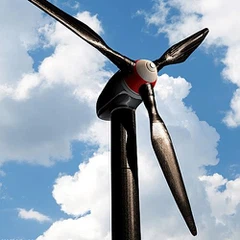


Carbon Fiber Wind Turbine Blades Manufacturer in China
Carbon fiber wind turbine blades use carbon reinforcement with epoxy resin to reduce weight while maintaining high structural strength. This combination enables longer blade designs, which can increase swept area and support higher energy output.
In real blade programs, performance is measured by consistency and reliability, not slogans. Repeatable manufacturing quality, fatigue-driven design support, and documentation that engineers and procurement teams can review are what move a project forward.
We manufacture carbon composite blade components for wind turbine applications, built for production programs where process control, traceability, and interface accuracy are required.

Carbon Fiber Manufacturing for Wind Blades Benefits
High Strength, Low Density
Carbon fiber is more than five times stronger than steel, but only one-fourth as dense as steel. This makes the blades less likely to break under strong wind loads, while significantly reducing their own weight.
Excellent Fatigue Life
Compared to glass fiber, carbon fiber composites have stronger fatigue resistance and can withstand hundreds of millions of wind load cycles, effectively reducing maintenance frequency and replacement costs.
Stronger Structural Reliability
Advanced processes such as prepreg or pultrusion can achieve complex integrated structures, reduce bolt connection points, reduce failure rates, and improve operational stability.
Easy to Transport
The segmented carbon fiber blade design facilitates long-distance land transportation and rapid on-site assembly, effectively breaking through the limitations of traditional transportation on ultra-long blades.
Our Scope of Supply

Complete Wind Turbine Blades
Full blade manufacturing with defined process control checkpoints to ensure consistent, repeatable output
Support for both onshore and offshore wind projects, aligned with your design and validation requirements
Segmented blade solutions available for logistics constraints or site conditions that require sectional delivery
Packaging, protection features, and clear labeling designed to minimize handling damage during transport and receiving
Carbon Composite Structural Components (Standalone Supply or Integrated Into Full Blades)
Spar flanges / main beam caps (load-bearing structures reinforced with UD carbon)
Shear webs/web reinforcements (for stiffness improvement and load transfer)
Root area reinforcements/load introduction structures
Blade skins and internal stiffeners (project-defined scope)
Leading-edge / trailing-edge structural parts, including interfaces to support additional protection systems when specified
Segmented blade joint interfaces and bonded assembly parts (application-dependent)
Components of Carbon Fiber Wind Turbines
Main Beam Cap: The most important application part of carbon fiber composite materials in wind turbine blades is the main beam cap. The carbon fiber main beam cap greatly reduces the weight of the blade and is currently the most commonly used one in wind turbines.
Skin Surface: Carbon fiber composite materials can also be used on the skin surface to reduce the force and torque acting on the support beam. The adoption of a good structural design can achieve "material-induced" blade load bending and torsion coupling.
Blade Root: When carbon fiber composite materials are used at the root of the blade, the bearing strength and fracture strength of the root material can be increased, the dynamic load applied to the bolts can be reduced, and the number of bolts at the root flange can be increased, thereby increasing the static strength and fatigue strength of the connection between the blade and the hub.
Blade Leading and Trailing Edge: Carbon fiber composite materials are used on the leading and trailing edges of wind turbine blades, which can not only improve the blade stiffness and reduce the blade mass, but also have a lightning protection effect by using a special design, reducing the damage to the blade caused by natural lightning.


How Carbon Fiber Improves Wind Turbine Performance
Carbon fiber significantly improves the overall operating efficiency and reliability of wind turbines, mainly in the following aspects.
Carbon fiber turbine blades can be designed to be longer and lighter, thereby increasing the swept area and capturing more wind energy per unit time. The natural rigidity of carbon fiber effectively reduces bending deformation of blades in strong winds, maintains the optimal aerodynamic shape, and improves power generation efficiency. Improve power generation efficiency. Offshore wind power generation is particularly valued for its strong resistance to corrosion, moisture, and ultraviolet rays. The use of carbon fiber materials has greatly improved the performance, stability, and economy of wind turbines.
Application of Wind Turbine Carbon Fiber
Onshore Wind Farms:
Constructed in mountainous areas, grasslands, deserts, and other areas with abundant wind resources, suitable for large-scale grid-connected power generation to supply power to cities or industrial areas.
Offshore Wind Farms:
Using the stable and strong wind power at sea, it is constructed in offshore or deep sea areas. It has large single-unit capacity and high power generation efficiency, and is suitable for large-scale energy demand in developed coastal areas.
Off-grid Systems
Combined with energy storage batteries or mixed with solar energy, it is widely used in remote areas, islands, communication base stations, border outposts, lighthouses, and other areas without electricity or unstable power supply to achieve independent power supply.

Carbon Fiber vs Fiberglass Wind Blades
|
Feature |
Carbon Fiber Blades |
Fiberglass Blades |
|
Weight & Strength |
Lighter and 5× stronger; allows for longer, more efficient blades |
Heavier and less strong; limits blade length and efficiency |
|
Fatigue Resistance |
Excellent; endures millions of load cycles with minimal wear |
Moderate; degrades faster under cyclic wind loading |
|
Durability |
Highly resistant to corrosion, UV, and moisture (ideal for offshore) |
Susceptible to environmental damage over time |
|
Cost |
Higher initial investment, but better long-term value |
Lower upfront cost, but more maintenance over time |
|
Design Flexibility |
Allows for advanced aerodynamic shapes and modular construction |
Limited shaping flexibility; more standard blade designs |
|
Application Suitability |
Ideal for large-scale, offshore, and high-performance turbines |
Common in smaller or cost-sensitive projects |
Who We Work With
Blade OEM / Tier 1 Manufacturers
We supply carbon composite blade components that fit into existing production lines. Our focus is consistent build quality, stable interfaces, and the paperwork needed for internal release and incoming inspection.
O&M / Repair Teams
We support repair and replacement needs with structural parts and reinforcement pieces that match real on-site constraints, including fit-up, handling, and turnaround requirements.
EPC / Project Teams
For projects where transport, site handling, and delivery timing matter, we follow defined packing standards and inspection checkpoints, so fewer issues show up during receiving and installation.
Structural & Materials Engineers
We work to your drawings, tolerances, and validation plan. That includes interface checks, key measurement records, and technical notes that make integration and sign-off easier.

FAQ
Q: What exactly do you supply—full blades or components?
A: We mainly supply carbon composite blade components such as spar caps, shear webs, root reinforcements, and LE/TE structural parts. For full-blade programs, the scope depends on blade size, logistics, and project requirements.
Q: Which blade sections are most suitable for carbon reinforcement?
A: Carbon is commonly used in spar caps and other load-bearing zones where stiffness-to-weight matters most. The final layout follows the blade design targets and validation plan.
Q: What information do you need for a technical quotation?
A: A component type + drawings (2D/3D), key interfaces and tolerances, resin/finish requirements (if any), target quantity, and delivery timeline.
Q: Can you support custom layup or stiffness targets?
A: Yes. We can adjust layup schedules and reinforcement zones based on your targets. Final sign-off is done against your validation and inspection requirements.
Q: What QC checkpoints do you run during production?
A: Typical checkpoints include critical interface measurements, thickness/fit checks, and in-process inspection records, plus final inspection summaries.
Leading carbon fiber wind turbine blades manufacturer and supplier in China, specializing in high-quality carbon fiber products with OEM/ODM services. Our factory offers carbon bike rims, fairings, and custom carbon fiber solutions for sports, automotive, and industrial use. Contact us for a quote.
