



What is Carbon Fiber AFO
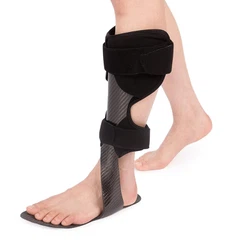
Carbon fiber afo is a lightweight and high-performance support device designed for patients with foot drop, dorsiflexion weakness, or limited foot mobility. It combines excellent strength and light weight to provide stable and comfortable support to help improve gait and walking ability. The product is durable and easy to wear, especially suitable for users with limited dexterity.
Carbon World provides a variety of carbon fiber AFOs to meet the personalized needs of different customers, and supports customized services to ensure that every customer can get the most suitable orthotic solution.
Type of Carbon Fiber AFO

Carbon Fiber AFO Brace
•Model: DZME021-AFO
•Age range (description): Adult
•Sport: Walking
•Size: S, M, L
•Closure type: Hook & Loop
•Fits most shoes
•OEM &ODM are available
•Carbon fiber patterns are customizable.
Send Inquiry Now

Carbon Fibre Afos
•Model: DZME022-AFO
•Age range (description): Adult
•Closure type: Hook & Loop
•Size can be customized
•OEM &ODM are available
Send Inquiry Now

Spiral Carbon Fiber Afo
•Model: DZME023-AFO
•Size: Right foot, customizable size
•Specific Uses For Product Hyperextension, Foot Drop
•Use for Ankle
•Age Range (Description): Adult
Send Inquiry Now

Features of Carbon Fiber Afo Drop Foot
Lightweight and Durable
Made of aviation-grade carbon fiber, it has high strength and lightweight characteristics, effectively reducing fatigue when worn for a long time.
Ergonomic Design
The lateral support structure allows the brace to be easily inserted into the shoe from the outside of the foot and the front of the ankle bone. It provides a variety of sizes and closure methods to achieve zero-contact wearing, effectively avoiding the common pain, friction, and abrasion problems of traditional AFOs.
Dorsiflexion Assist function
The carbon fiber material combined with the foot plate design that fits the arch of the foot not only provides precise support and control for patients with foot drop, but also stores and releases energy during the gait cycle, plays a dorsiflexion assist and spring-like buffering role, and improves the naturalness of gait.
How to Measure for Carbon Fiber AFO
| Picture | Size | L(in) | W(in) | H(in) |
|
|
|
 |
 |
|
| S | 9.52 | 2.95 | 13 | |
| M | 10.7 | 3.22 | 13.5 | |
| L | 11.1 | 3.42 | 14.17 | |
|
*The length of the foot support insole can be cut according to the size of the shoe sole. *When cutting, it needs to be polished and smoothed to avoid hurting the skin. Please wipe off the falling powder before putting it on. |
||||


How to Customize Carbon Fiber AFO
Choose between lateral and posterior support depending on the user's specific situation. Lateral support is located on the outside of the ankle joint, which can effectively reduce heel pressure and is suitable for most foot drop patients; posterior support is located behind the foot, providing greater control and stability.
The edge cut of the support can be adjusted according to the wearer's muscle tone, joint range of motion, and shoe type preference. We offer a variety of trim designs from full foot coverage to midfoot or toe cutoff to adapt to different gait needs.
Choose carbon fiber materials of different hardnesses according to the intensity of daily activities and the need for energy return. The soft model is suitable for daily walking, and the enhanced model provides stronger rebound and support performance for users with higher activity or higher support needs.

Custom Carbon Fiber AFO Display


Carbon Fiber AFO: Real-Life Showcase

Who Needs Carbon Fiber AFO?
Carbon fiber AFO is suitable for patients with various neuromuscular diseases, sports injuries, and special structural needs, and can achieve a good balance between gait control, support stability, and daily comfort.
Patients with Neuromuscular Diseases
Foot drop: Patients with stroke, multiple sclerosis, spinal cord injury, etc., need assistance in lifting their feet to prevent tripping.
Abnormal muscle tone: Patients with cerebral palsy, dystonia, etc., need to enhance anti-torsion ability and stabilize the ankle joint.
Peripheral neuropathy: Patients with diabetic nerve damage need a lightweight and sufficiently strong protective brace.
Sports Injuries and Orthopedic Problems
Ankle instability: Patients with ligament injuries and postoperative rehabilitation need to provide dynamic support.
Arch collapse: Suitable for flat feet or posterior tibial tendon dysfunction, the arch is supported by a carbon plate structure.
Achilles tendonitis/plantar fasciitis: Use the resilience of carbon fiber materials to reduce the burden on the foot when walking.
Special Needs Groups
Amputees: Can be used as an intermediate component of the prosthetic system to provide higher energy feedback.
Congenital malformations in children, such as vertical talus and other problems, are taken into account to support a strong and lightweight design to facilitate adjustment during the growth stage.
Carbon Fiber AFO VS Plastic AFO
|
Feature |
Carbon Fiber AFO |
Plastic AFO |
|
Weight |
Ultra-light, reduces fatigue during extended wear |
Heavier may cause discomfort over time |
|
Energy Return |
Provides spring-like push-off for a more natural gait |
Rigid, lacks energy return |
|
Durability |
Highly impact-resistant and fatigue-resistant for long-term use |
More prone to warping and wear over time |
|
Comfort |
Ergonomically contoured, with minimal skin irritation |
Bulky and may cause pressure points or rubbing |
|
Appearance & Fit |
Sleek, low-profile design fits most shoes |
Larger frame, limits footwear choices |
|
Cost |
Higher upfront investment, but greater long-term value |
Lower cost, suitable for short-term or temporary support |
Manufacturing & Quality Control of Carbon Fiber AFO
Layup & Curing Control
The performance of a carbon fiber ankle-foot orthosis (AFO) depends heavily on the layup process. We design each orthosis around the load path, reinforcing high-stress zones such as the plantar transition area and the ankle joint, while keeping other sections more flexible for a smoother gait.
Fiber orientation and layup sequence are tightly controlled to balance support and comfort. Compared with “one-size-fits-all” orthoses, an optimized layup can reduce pressure points and feel more natural during movement.
We standardize vacuum integrity, temperature profiles, and curing time because even small changes in these parameters can affect stiffness and long-term durability.
After curing, we trim and finish the part based on fit and skin-contact areas. Clean edges and uniform thickness are just as important as surface finish on carbon fiber.
Inspection Checkpoints & Traceability
All incoming materials are inspected by batch, so fiber and resin sources can be traced when required by the customer.
During production, we verify key checkpoints such as thickness in critical zones, symmetry, and interface dimensions (strap areas, ankle contours, and footplate geometry).
Each brace is inspected for common risk items: voids, signs of delamination, surface defects, and edge quality. If it cannot withstand everyday loading, it will not ship.

FAQ
Q: What is a Carbon Fiber AFO?
A: A Carbon Fiber AFO (Ankle-Foot Orthosis) is a lightweight brace designed to support the ankle and foot during walking. Carbon fiber is often used because it can provide strength with low weight.
Q: Who typically uses a Carbon Fiber AFO?
A: It’s commonly prescribed for gait support when there is weakness, instability, or foot drop. The right model depends on diagnosis, muscle strength, and walking goals—your clinician should confirm fit and type.
Q: What's the difference between carbon fiber and plastic AFOs?
A: Carbon fiber AFOs are typically lighter and more responsive, while plastic AFOs are often more adjustable and easier to modify. The best choice depends on your clinical needs and comfort.
Q: Will a carbon AFO “return energy” when I walk?
A: Some designs are built to provide a spring-like response during gait, but how it feels depends on the brace design, stiffness, footwear, and your walking pattern.
Q: How do I choose the right stiffness level?
A: Stiffness should match the user’s strength, activity level, and gait pattern. Too stiff can feel restrictive; too flexible may not provide enough support. This is best set by an orthotist during fitting.
Q: What measurements are needed for sizing?
A: Common inputs include foot length, calf circumference, ankle/heel dimensions, shoe size, and sometimes a scan or cast. Requirements vary by design.
Q: Can I wear it with normal shoes?
A: Usually yes, but the shoe needs enough volume and a stable heel counter. Many users prefer shoes with removable insoles and a wider opening.
Q: How long does it take to get used to wearing an AFO?
A: Many users follow a gradual break-in schedule (short periods at first), but the safest plan should be provided by your clinician—especially if you have skin sensitivity or circulation issues.
Q: How do I prevent rubbing or skin irritation?
A: Proper fit is the first step. Use the recommended socks/liners, check skin daily in the first weeks, and stop use if you see persistent redness or pain—contact your clinician for adjustments.
Q: How do I clean and maintain a Carbon Fiber AFO?
A: Wipe with mild soap and water, dry fully, and avoid harsh solvents or high heat. Inspect straps and pads regularly and replace worn parts.
Other Best-selling Medical Product

Carbon Fiber Brace

Carbon Fiber Prosthetic Leg

Carbon Fiber Wheelchair Wheels
Leading carbon fiber afo manufacturer and supplier in China, specializing in high-quality carbon fiber products with OEM/ODM services. Our factory offers carbon bike rims, fairings, and custom carbon fiber solutions for sports, automotive, and industrial use. Contact us for a quote.
