







What Are Carbon Spokes?
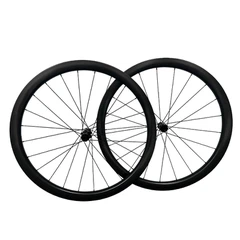
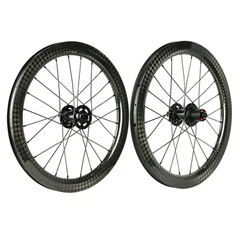
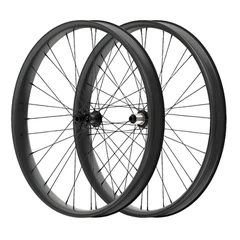
Carbon fiber spokes are bicycle spokes made from carbon fiber composite materials. They connect the hub and rim while helping control wheel tension, stiffness, and load distribution. Carbon fiber spokes are commonly used in high-performance wheelsets, where low rotational weight, lateral stiffness, and aerodynamic profile are important.
The performance of carbon fiber spokes does not depend only on the carbon fiber itself. It is also affected by the spoke shape, connector design, tension control, hub compatibility, and the way the complete wheel is built.
Our Carbon Fiber Bicycle Spoke Products

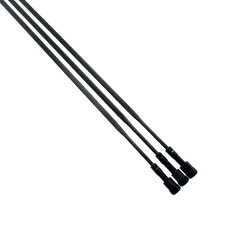
Carbon Spokes
•Model: MYB07&3.2mm-Spokes
•Material: Carbon fiber
•Type: Flat
•Diameter: 3.2mm
Send Inquiry Now

Carbon Bicycle Spokes
•Model: MYB07&5.4mm-Spokes
•Material: Carbon fiber
•Type: Flat
•Diameter: 5.4mm
Send Inquiry Now
If you would like more information on carbon fiber spoke sizes, please get in touch with Carbon World.

Advantages of Carbon Spokes
Lightweight: A single carbon fiber spoke typically weighs around 3-5 grams (for a 260mm length), reducing weight by 30%-50% compared to steel spokes. This helps lower the overall weight of the wheelset and improve riding efficiency.
High Stiffness: Carbon fiber is more rigid than metal materials, allowing for better power transmission and reduced energy loss, especially during acceleration, climbing, and high-speed cornering, resulting in greater stability.
Low Damping: The damping properties of carbon fiber effectively absorb road vibrations, providing a more comfortable riding experience while reducing energy loss due to vibrations.
Fatigue Resistance: Carbon fiber spokes have a longer fatigue life and are less prone to fatigue fractures, which are common in metal spokes, making them suitable for high-intensity riding.
Carbon Spokes vs Steel Spokes
| Feature | Carbon Spokes | Steel Spokes | What Buyers Should Know |
| Weight | Lower rotational weight, suitable for lightweight wheel builds. | Heavier, but widely used and easy to source. | Weight saving depends on spoke length, profile, connector design, and wheel build. |
| Stiffness | High directional stiffness helps improve wheel response. | Good elasticity and easier adjustment during wheel building. | Carbon spokes require more precise tension control and wheel-building experience. |
| Aerodynamics | Can be designed with a flat or aero profile to reduce drag. | Round or bladed options are available, depending on the model. | Aero benefit depends on spoke shape, wheel depth, riding speed, and full wheel design. |
| Corrosion Resistance | Carbon body does not rust, but metal connectors and nipples still need protection. | Stainless steel spokes offer good corrosion resistance, but coating or surface damage may still matter. | Maintenance should also consider nipples, connectors, and the riding environment. |
| Maintenance | Requires careful tension checking and compatible replacement parts. | Easier to replace, true, and service in most bike shops. | Carbon spoke serviceability depends on the connector design and spare-part availability. |
| Best Use | Performance road, gravel, aero, and high-end custom wheelsets. | Training, commuting, touring, and cost-sensitive wheel builds. | Choose based on performance target, budget, serviceability, and wheel system compatibility. |
Carbon Wheel Building & Tension Control
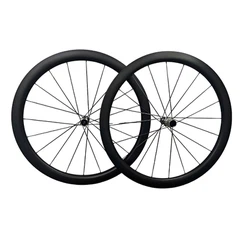
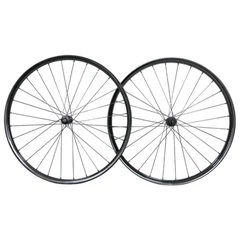
When building a carbon wheelset, spoke tension, rim alignment, and hub interface matching must be carefully controlled. Carbon spokes should be tensioned gradually instead of being tightened aggressively at once. This allows the spokes, nipples, hub, and rim to settle into a more stable working condition.
Stable spoke tension helps maintain wheel stiffness, roundness, and long-term riding stability. If the tension is uneven, the wheel may develop noise, slight loosening, or changes in trueness after the first rides. Therefore, tension balance, dish, lateral runout, and radial runout should be checked during the wheel-building process.
After tensioning, stress relief is also required. Controlled loading helps release residual stress around the spoke connector, nipple seat, hub hole, and rim interface. The wheel should then be rechecked and adjusted before final inspection. For OEM wheel projects, we recommend confirming ERD, hub flange design, lacing pattern, spoke length, target tension range, and connector type before sampling to reduce later assembly and truing issues.


Carbon Spoke Compatibility Guide
Hub Compatibility
Our carbon spokes support multiple hub types commonly used in the industry:
Straight-pull Hubs: Ideal for maintaining spoke alignment and tension, our spokes fit perfectly with straight-pull flange designs.
J-bend Hubs: While less common for carbon fiber spokes, custom options are available for specific J-bend flange profiles.
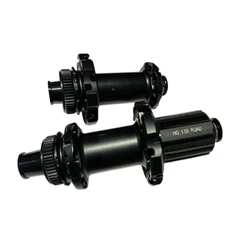
Center-lock Hubs: Compatible with disc brake systems, carbon spokes accommodate the demands of center-lock flange geometry.
Rim Compatibility
The shape and profile of the rim influence spoke choice. Our carbon bike spokes work well with:
Hookless Rims: Suitable for tubeless-ready designs, our spokes ensure precise tension control with modern hookless profiles.
Hooked Rims: Traditional hooked rims remain compatible, supporting versatile wheel builds.
Deep-section Aero Rims: Our aero-profiled carbon spokes complement deep rim shapes, optimizing aerodynamic performance.
Brake System Compatibility
Disc Brakes: Our carbon spokes are engineered to withstand the higher torque and stress loads from disc brake setups without compromising spoke integrity.
Rim Brakes: Compatible with rim brake wheels, our spokes maintain excellent stiffness and fatigue resistance under braking forces.
Pro Tips
Use spoke tension meters calibrated for carbon spokes to ensure optimal tension.
Pair with corrosion-resistant nipples designed for composite spokes.
Contact our engineers for custom solutions or special hub/rim interfaces.
Our compatibility expertise ensures your carbon fiber bicycle spokes work flawlessly with your wheel components, delivering maximum performance and longevity.
Carbon Fiber Spoke Weight
A single spoke typically weighs only a few grams, yet it plays a critical role in overall wheel dynamics. Because spokes rotate with the rim, their weight directly affects acceleration and climbing response. Reducing spoke mass helps lower rotational weight, which can make the wheel feel quicker under load.
The lightweight design comes from a controlled carbon fiber layup rather than excess material. Strength is built into the internal structure, allowing the spoke to remain slim while maintaining proper tension stability in a correctly built wheel.

FAQ
Q: How do I choose the best carbon fiber spokes for my bike?
A: Choosing carbon fiber spokes should be based on your riding style and wheelset configuration: For road racing or climbing, ultralight, flat spokes (3.2–3.5mm) are recommended for improved acceleration efficiency; for gravel or endurance riding, thicker spokes (5.0–5.4mm) can be chosen for enhanced impact resistance; ensure compatibility with your hubs, as carbon fiber spokes are generally only compatible with straight-pull or center-lock hubs.
If unsure, contact our engineers for customized advice based on rim depth, hub construction, and braking system.
Q: Can I easily replace my existing spokes with carbon fiber spokes?
A: Not always.
Carbon fiber spokes require a dedicated hub connector and precise tensioning tools.
If your hub is a straight-pull design, it can be replaced by a professional technician.
However, J-shaped steel hubs are generally incompatible with carbon fiber spokes. Installation and adjustment by a professional technician familiar with carbon wheel construction is recommended.
Q: What are the advantages of using carbon fiber spokes over traditional metal spokes?
A: Lightweight: Approximately 70% lighter than steel spokes;
High rigidity: More direct power transmission, more efficient for climbing and sprinting;
High durability: Never rusts, strong fatigue resistance.
More comfortable: Carbon fiber has elastic shock-absorbing properties, resulting in a smoother ride.
Q: Are carbon fiber spokes more durable than aluminum spokes?
A: Yes. Carbon fiber spokes outperform aluminum spokes in both fatigue life and environmental resistance.
They will not stretch or rust over time, and with proper tension and regular checks, they can maintain stable performance through years of high-intensity use.
Q: Can I customize the length, finish, and branding of carbon spokes?
A: Absolutely. We offer full customization, including length (240–310mm), diameter (2.6mm/2.8mm), surface finish (matte, gloss, UD/3K), and optional laser-engraved branding.
Q: Are carbon spokes safe for disc brake wheels?
A: Yes. Our carbon spokes are engineered to handle the increased torque and spoke tension loads typical of disc brake systems. They've been validated through fatigue and impact testing.


Leading carbon spokes manufacturer and supplier in China, specializing in high-quality carbon fiber products with OEM/ODM services. Our factory offers carbon bike rims, fairings, and custom carbon fiber solutions for sports, automotive, and industrial use. Contact us for a quote.
