

Carbon Frame Testing
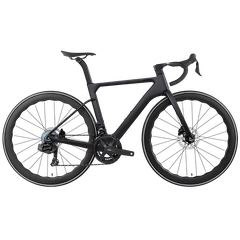
At Carbon World, every carbon fiber frame project undergoes rigorous testing and inspection before entering mass production. Our testing focuses on frame strength, stiffness, fatigue resistance, impact performance, dimensional accuracy, and surface quality. For new product development, we follow a comprehensive validation process, which includes a carbon frame rigidity test, disc brake mount fatigue test, head tube fatigue test, and frame impact test. Only after all test items meet the required standards will the product move to the next stage. If any test does not pass, we will review the structure, layup, or production process and test again until the frame meets all inspection requirements.

Why Carbon Frame Testing Matters
The carbon frame may look simple from the outside, but its real performance depends on fiber layup, resin bonding, curing quality, and reinforcement design. Testing helps us find potential risks before the frame reaches the rider or the customer's market.
Ask Our Engineer
The testing procedure for carbon fiber frames is as follows

Carbon Frame Rigidity Test
Rigidity testing is used to check the structural response of a carbon fiber frame under controlled force. It helps evaluate whether key areas of the frame have sufficient stiffness to support riding stability, efficient power transfer, and precise handling.
Common test areas include head tube stiffness, bottom bracket stiffness, rear fork stiffness, and rear triangle stiffness. As shown in the figure below, rigidity testing is usually performed with a universal testing machine, and the test data is automatically recorded by the equipment.
Get Quote
Disc Brake Mount Fatigue Test
The disc brake mount fatigue test is used to verify the structural stability of the brake mounting area under repeated braking force. The frame is fixed on a fatigue testing machine, with the rear fork secured in the disc brake mount fixture. The test runs at 2Hz, with 1000N force, a 340mm force arm, and 25,000 cycles. After testing, the frame is considered qualified if there is no fracture, obvious crack, or structural failure in the disc brake mount and related connection areas.
This test helps reduce the risk of cracking, deformation, or brake mount misalignment during long-term use.
Contact Us


Head Tube Fatigue Test
The head tube fatigue test simulates repeated force on the front end of the frame. It helps check whether the head tube, top tube joint, down tube joint, and fork interface can remain stable under long-term riding stress.
During the test, the frame is fixed on a dedicated testing machine. A horizontal force is applied to the fork, allowing it to move freely back and forth. The test conditions are +1470N / -600N force, 3Hz frequency, and 100,000 cycles. The frame passes the test if no fractures or visible cracks are found.
Ask Our Engineer
Frame impact test
The frame impact test is used to simulate the structural performance of a carbon fiber frame when it is suddenly impacted during riding or transportation. It mainly checks key stress areas such as the head tube, top tube, down tube, bottom bracket, and rear triangle. After testing, if the frame shows no fractures, visible cracks, or structural failure, it indicates good impact resistance.
Ask Our Engineer


Carbon Fiber Frame Strength Failure Test
The carbon fiber frame strength failure test is used to evaluate the frame's load-bearing capacity under extreme force. During the test, the frame is fixed on a dedicated testing machine, and continuous load is applied to key stress areas such as the head tube, seat tube, bottom bracket, or other structural joints until the set requirement is reached or structural failure occurs.
If no fractures, visible cracks, or abnormal deformation are found after testing, the frame is considered to meet the required structural strength standard.
Ask Our Engineer
