


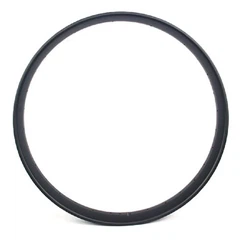
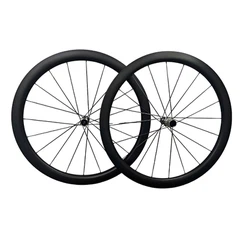
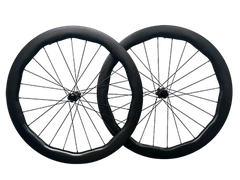
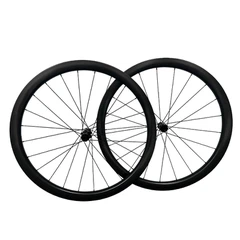
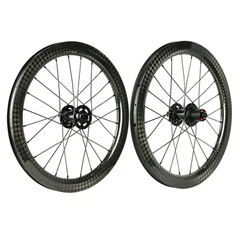
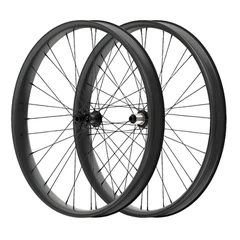
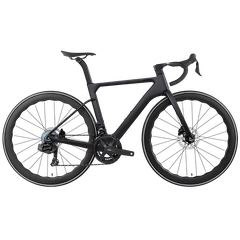
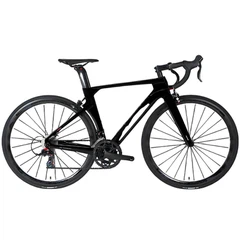



Carbon gravel wheelsets have become a popular choice in the gravel riding world in recent years, offering a balance of lightweight, high stiffness, and excellent vibration absorption, making them a top choice for advanced riders. However, their technical characteristics place a higher demand on riding technique, and proper use can significantly improve handling and durability.
Material Properties and Compatibility
Carbon gravel wheelsets typically utilize a multi-layer high-modulus carbon fiber layup process, paired with a wide rim design (typically 23-30mm internal width), compatible with tires 28-45cm, and offering a balanced balance of rolling resistance and handling. Key to this is the rim's "impact layer" structure, which effectively dissipates high-frequency vibrations from gravel roads. However, extreme impact can still cause delamination between the carbon fiber layers. Therefore, maintaining tire pressure is crucial-it's recommended to be 15-20 psi lower than for road wheels, allowing tire deformation to absorb vibration and avoid localized stress concentration on the rim.
Key Riding Techniques
Weight Distribution: When accelerating on gravel roads, lower your upper body and shift your center of gravity backward to reduce the risk of the front wheel lifting off the ground. When cornering, push down with your outside foot and fine-tune the handlebars to maintain a stable trajectory.
Tire Pressure Strategy: On hard gravel roads, increase tire pressure appropriately (e.g., 35-40 psi). On soft or loose surfaces, reduce to 30-35 psi to achieve a balance between grip and rolling efficiency.
Suspension Utilization: Although carbon fiber wheels are highly rigid, they still retain some flexibility when paired with 12-16mm thru-axles. This allows for flexible contact between the wrist and saddle to filter vibrations and prevent muscle fatigue.
Maintenance Recommendations: Regularly check the spoke tension of your carbon fiber wheels (using a tension gauge is recommended) and avoid aggressive braking (especially in wet conditions, as the friction coefficient between carbon fiber and resin decreases). Choosing compatible disc brake pads (preferably resin) can extend the life of your wheels.
Mastering the characteristics and techniques of carbon fiber gravel wheels not only unleashes their performance potential, but also improves riding safety and fun in complex road conditions.


