

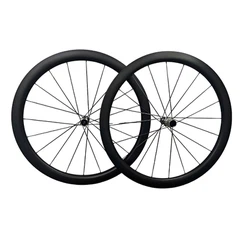
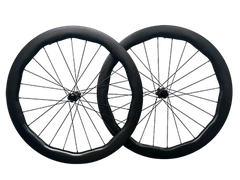
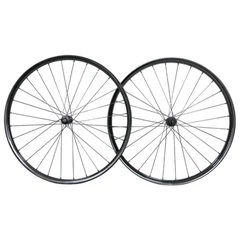
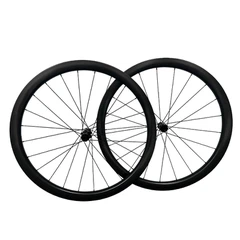
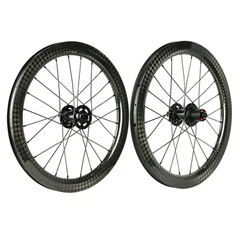
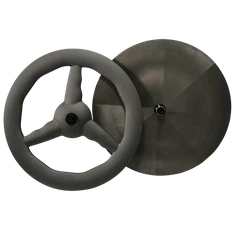
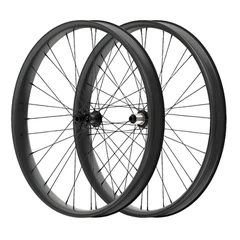
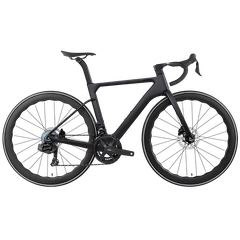
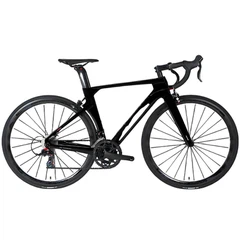
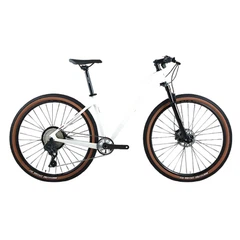
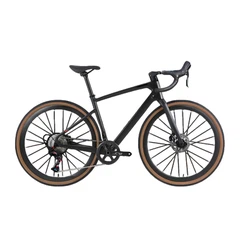
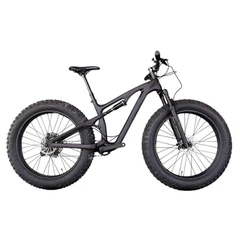
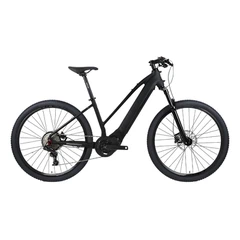
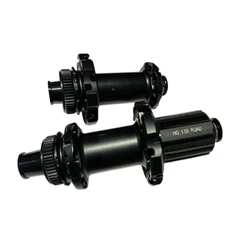



The performance of a bicycle seems to be determined by the three main components: frame, components, and wheelset. However, upon closer examination, the spokes play a very important role at the center of those rapidly spinning wheelsets. They are by no means a simple connection, but rather the core engineering that determines the rigidity, strength, weight, aerodynamics, and even the riding experience of the wheelset.

The Significance of Spoke Crossing Numbers
The number of spoke crosses in the lacing pattern is a key factor determining wheelset performance. Crossing numbers (such as "0X", "1X") refer to the number of times the spokes cross each other as they travel from the hub to the rim. This number not only affects the spoke arrangement but also directly impacts the wheelset's strength, stiffness, and weight.
A higher crossing number results in a larger spoke angle, enhancing the wheelset's torsional resistance and lateral stiffness. Crossed spokes effectively distribute stress, increasing wheelset strength and making them particularly suitable for riding under heavy loads or on rough surfaces.
Common Spoke Weaving Methods
0X (Radial) Spoke Lacing
0X (Radial) spoke lacing refers to spokes that connect directly and vertically from the hub to the rim without any crossings; this is also known as "radial" or "straight-pull" lacing.
Features:
Lightest: Due to the absence of crossings, the spokes are arranged in a straight line, reducing additional structural weight.
High Longitudinal Stiffness: The straight arrangement of the spokes provides extremely high stiffness under longitudinal forces, effectively transmitting power.
Low Wind Resistance and High Transmission Efficiency: Because the contact area between the spokes and the air is minimal, this design has minimal impact on airflow, making it suitable for riding requiring low wind resistance and high efficiency.
Poor Lateral Stiffness: The lack of cross support results in weaker lateral stiffness, making the wheelset prone to deformation during cornering or when lateral forces are applied.
Poor Torsional Resistance: Due to the lack of cross support, the wheelset has poor resistance to torsional forces, especially in disc brake applications, where braking torque can cause spokes to loosen or the rim to deform.
Suitable Scenarios:
Suitable for applications with strict requirements on weight and wind resistance, especially when climbing hills, where its lightweight design provides a significant advantage.
Particularly suitable for racing, triathlons, and other events requiring maximum speed and efficiency.
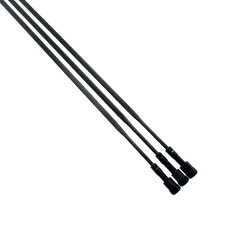
Due to the inherent lightweight and high rigidity of carbon fiber spoke, combined with a radial lacing method, it achieves extreme weight reduction, making it ideal for racing and professional cycling.
1X (Single Cross) Spoke Lacing:

The spokes cross once from the hub to the rim, forming a single crossing point. Each spoke crosses every other spoke once, with a smaller spoke angle, resulting in a simpler overall lacing.
Features:
Compared to radial (0X) lacing, 1X lacing offers some torsional resistance and lateral stiffness, making the wheelset more stable and reducing the risk of spoke loosening.
It is slightly heavier than radial lacing, but offers greater stiffness and stability, making it suitable for scenarios where extreme lightweighting is not required.
Due to the smaller crossing angle, 1X lacing maintains a lower weight, but compared to higher cross counts (such as 3X or 4X), it is slightly less strong and stiff.
1X lacing has a wide range of applications, offering a degree of durability and comfort, but it is not suitable for environments requiring extremely high strength and impact.
Suitable Scenarios:
Lightweight vehicles such as urban commuter bikes, folding bikes, and children's bikes are suitable for daily use, especially in situations where weight is a concern but high-intensity loads are not required. Some disc brake systems can also use 1X lacing because it provides sufficient torsional rigidity for general riding needs.
Suitable for lightweight riding on mixed surfaces or city streets, especially where a balance between weight and stiffness is required.
2X (Double Cross)

Each spoke crosses twice. This lacing achieves a balance between weight and stiffness, making it suitable for most bicycles. It has no obvious weaknesses and is a versatile choice for all-around riding, racing, commuting, and off-road use. It's a very common lacing pattern.
Features:
Higher stiffness, able to withstand greater lateral impacts, and increasing wheelset stability.
Increased weight, but strength and torsional rigidity are also significantly improved.
Provides a better balance, suitable for various terrains.
Suitable Scenarios:
Suitable for long-distance riding, touring bikes, mountain bikes, and other riding scenarios requiring strong stability and impact resistance.
Ride where higher lateral stability and durability are required.
3X (Triple Cross)

Definition: The spokes cross three times from the hub to the rim, forming three intersection points, providing greater strength and durability, ideal for rugged mountain terrain.
Features: Offers extremely high lateral stiffness, effectively distributing stress on the wheelset and providing strong torsional resistance.
Compared to 2X, it offers better stiffness and stability, able to withstand greater forces and impacts.
Heavier weight, suitable for wheelsets requiring high strength and durability.
Suitable for mountain riding and off-road environments demanding extremely high strength and stability.
Suitable Scenarios:
Mountain bikes, or downhill bikes, are especially for riding on uneven and rugged terrain.
For heavy-duty wheels, especially for riding under high loads.
Hybrid Lacing:

Spoke lacing is not static but flexibly adjusted based on different riding needs, braking systems, and wheel usage environments. Different lacing methods can achieve an optimal balance while improving wheelset performance, increasing strength and rigidity, and balancing weight requirements. This also means that the front and rear wheels of the same bike may have different lacing methods because the direction and magnitude of the forces borne by the front and rear wheels differ.
For rim brakes on the front wheel, a radial lacing is often chosen. This isn't to say that cross-lacing is bad, but it's unnecessary. Disc brakes are best suited for a 2X cross lacing to ensure safety. Most disc brakes also use a standard lacing.
The rear wheel lacing combinations are very complex. Disc brakes often have inconsistent lacing on the left and right sides, almost to the point of being a combination of different designs. This lacing is mostly used to balance lateral tension and prevent swaying. Examples include radial lacing on the drive side, 2X lacing on the non-drive side, and the now common 2:1 lacing (left/right spoke count/cross count ratio 2:1), which is used to balance the tension on the non-drive side.
The Specific Impact of Cross-Count on Performance
Strength and Stiffness: Cross-lacing effectively strengthens the connection between the spokes and the rim, reducing wheelset deformation under lateral impacts. Therefore, 3X or 4X cross-lacing wheelsets are more robust and suitable for high-load riding. They distribute force evenly, offering advantages in mountain biking and cross-country riding.
Weight and Flexibility: Higher cross-lacing counts mean longer spokes and increased weight. This increases the overall weight of the wheelset, but also enhances stiffness and torsional rigidity. Conversely, lower cross-lacing counts result in lighter wheelsets, but lower stiffness and strength under lateral forces, making them suitable for track and road riding where weight is critical.
Wheelset Stability: High cross-lacing count wheelsets (such as 3X and 4X) offer better lateral stability, maintaining stability during aggressive handling and hard braking, reducing the possibility of wheel bending and twisting. Low cross-lacing count wheelsets (such as 1X) are more prone to rim deformation and spoke loosening.
Recommendations for Choosing the Right Crossover
Racing Bikes: If you prioritize lightweight design and aerodynamics, opt for a low crossover "0X radial lacing," particularly suitable for road racing or time trial wheelsets.
Mountain Bikes & Touring Bikes: A 3X or 4X crossover lacing is recommended to improve wheelset durability and shock resistance. Mountain biking often involves rough terrain and significant impacts, making strength and stability crucial.
Disc Brake Systems: For disc brake wheels, a 2X crossover lacing is recommended to enhance torsional rigidity and braking stability.
Summary
The choice of spoke crossover directly impacts wheelset performance. By adjusting the crossover, riders can find the optimal balance between weight, strength, stiffness, and comfort to meet different riding needs. The choice should be based on the riding style and intended use of the wheels.
FAQ
Q: What is a mixed spoke lacing?
A: A mixed spoke lacing refers to using different spoke crossover arrangements on the front and rear wheels, or left and right wheels, of the same bicycle. This lacing method selects the appropriate crossover pattern based on the load and mechanical requirements of different parts, optimizing the wheelset's performance and durability.
Q: Why are the front and rear wheels laced differently?
A: The front and rear wheels bear different forces. The front wheel typically requires a lighter structure and is suitable for a simpler lacing pattern (such as radial lacing), while the rear wheel bears a greater load, especially on the drive side, thus using a more complex lacing pattern (such as 2X crossover lacing or 2:1 lacing) to increase rigidity and stability.
Q: Are there differences in the spoke lacing used by disc brakes and rim brakes?
A: Yes, disc brake wheelsets typically use a 2X crossover lacing because disc brakes generate greater torsional forces, and a 2X crossover lacing provides better torsional resistance. Rim brake systems typically use radial lacing because it is lightweight and effectively transmits braking force to the rim.
Q: What is a 2:1 lacing, and what are its advantages?
A: A 2:1 lacing scheme is an asymmetrical spoke pattern where the number of spokes on the drive side is twice that of the non-drive side, and the crossover count is also different. This lacing scheme aims to balance the tension between the left and right sides, especially under high loads and high power output, preventing wheelset deformation due to uneven tension and improving wheelset stability and durability. The Campagnolo G3 is an example of a 2:1 lacing scheme.
Q: How to Choose the Right Spoke Lacing Scheme?
A: The choice of spoke lacing scheme should be determined based on the usage scenario, load requirements, and braking system. Rim brake wheelsets: Radial lacing is typically used because it is lightweight and provides sufficient braking performance.
Disc brake wheelsets: A 2X crossover lacing scheme is recommended to enhance torsional resistance.
Rear wheel: A radial lacing scheme (drive side) and a 2X crossover lacing scheme (non-drive side) can be used, or a 2:1 lacing scheme can be chosen to balance tension and improve durability.
Q: How to Maintain Wheelsets Using Mixed Lacing Schemes?
A: Like regular wheelsets, wheelsets using a hybrid lacing system also require regular inspection and maintenance:
Check the spoke tension to ensure it is even.
Clean the wheelset regularly to prevent dirt and other debris from getting into the spoke gaps.
Regularly check the condition of the rim and spokes to prevent wheelset deformation due to uneven stress.


