


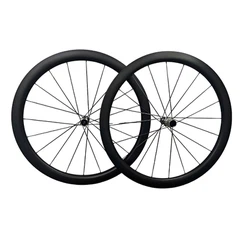

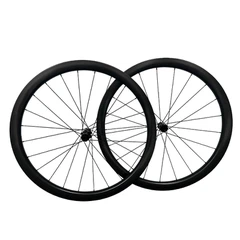
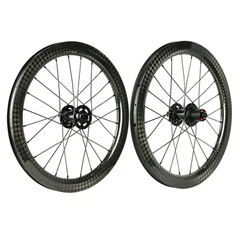
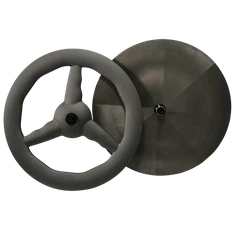
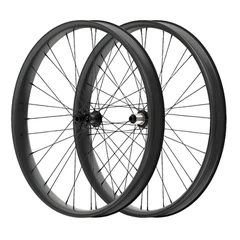
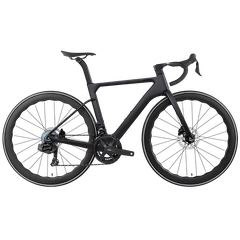
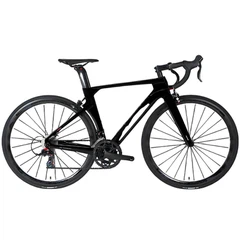
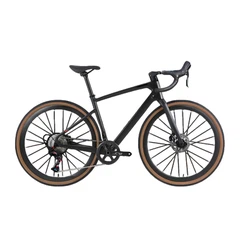
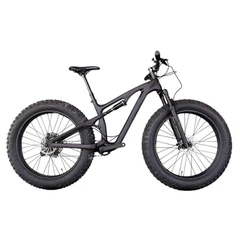
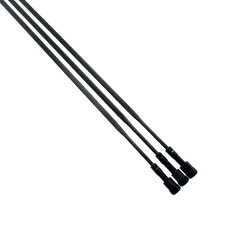




In modern bicycle and high-end wheel designs, carbon fiber spokes are increasingly becoming the preferred solution for achieving ultimate performance and lightweighting. Compared to traditional steel spokes, carbon fiber spokes, thanks to their unique material properties, offer significant advantages in weight, stiffness, and aerodynamics.
The core advantage of carbon fiber spokes lies in their extreme lightness. Carbon fiber composites have a density approximately one-quarter that of steel, and a single carbon fiber spoke is typically over 60% lighter than a steel spoke. This significantly reduces the vehicle's unsprung mass and enhances acceleration response. Furthermore, carbon fiber possesses extremely high specific strength and modulus. Under the same load, carbon fiber spokes are more rigid than steel spokes, effectively reducing wheel deformation at high speeds or when climbing, thereby improving handling stability.
Carbon fiber spokes also offer excellent aerodynamic performance. Their slender cylindrical structure optimizes airflow resistance through the wheel. Combined with the deep-section rim design, this further reduces wind resistance, helping riders save energy on flat roads and descents. Some high-end carbon fiber spokes also feature profiled cross-sections, such as flat or oval shapes, to further reduce turbulence and improve efficiency at high speeds.
However, carbon fiber spokes also have limitations, such as higher cost, lower impact resistance than steel spokes, and the potential for brittle fracture under extreme stress. Therefore, their application is primarily limited to racing bicycles and high-end road bikes. With advances in materials science, the durability and cost-effectiveness of carbon fiber spokes are expected to further improve, bringing a superior performance experience to cycling enthusiasts.


