

Introduction
Does the material of an Ankle-Foot Orthosis (AFO) directly impact a patient's mobility, comfort, and long-term rehabilitation outcomes? In recent years, carbon fiber AFOs have rapidly gained popularity, challenging the traditional plastic AFO designs that have prevailed for decades.
But which option is truly the better choice? Lighter weight does not necessarily equate to greater strength, nor does superior flexibility guarantee a more comfortable fit.
In this guide, we will provide an in-depth analysis of the substantive differences between carbon fiber and plastic AFOs, examining them across multiple dimensions, from structural performance to the patient experience.
What Is an AFO?
An Ankle-Foot Orthosis (AFO) is a wearable medical assistive device designed to provide support to the ankle and foot, thereby helping to stabilize limb movement and improve walking ability. It is typically worn inside or alongside a shoe, functioning by controlling the alignment and movement of the lower leg.
AFOs are widely utilized in the fields of rehabilitation therapy and long-term care, addressing a variety of conditions such as "drop foot" (difficulty lifting the front of the foot), stroke recovery, cerebral palsy, and other neuromuscular disorders. In these cases, the device provides crucial support, enhances balance, and helps prevent falls, thereby making patients' daily activities safer and more efficient.

What Is a Carbon Fiber AFO?
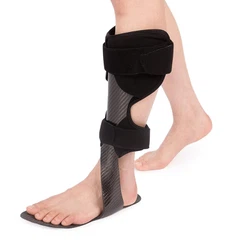
The Carbon Fiber AFO is crafted from advanced carbon fiber composite materials, designed to combine exceptional strength with high precision. Its core structure typically consists of layered carbon fiber sheets arranged in a "layup design"; these sheets are strategically positioned to precisely regulate the orthosis's stiffness, flexibility, and load distribution. By adjusting the orientation and thickness of the fibers, the carbon fiber composite material allows for the fine-tuning of the orthosis's performance characteristics. The resulting structure is highly optimized, providing robust support to the foot and ankle while maintaining a lightweight overall profile. This material is typically combined with a resin system and molded under strictly controlled conditions to ensure product consistency and durability.

Carbon Fiber AFO Brace
Send Inquiry Now

Carbon Fibre AFO
Send Inquiry Now

Spiral Carbon Fiber AFO
Send Inquiry Now
Key Features
Lightweight Construction: Significantly lighter than plastic alternatives, thereby reducing fatigue associated with prolonged wear.
High Stiffness: Provides powerful support and stability, making it particularly suitable for users requiring controlled movement.
Energy Return: Capable of storing and releasing energy during walking, which helps enhance gait efficiency and forward propulsion.
Typical Applications in High-Performance Orthotics
Rehabilitation training for patients recovering from strokes or neurological disorders
Assistive support for conditions such as foot drop and gait instability
Active users seeking greater mobility and responsiveness
Clinical treatment settings focused on improving walking efficiency
What Is a Plastic AFO?
The plastic ankle-foot orthosis is typically made from polypropylene or other thermoplastic materials, selected for their balanced combination of strength and flexibility. The process begins by heating a flat thermoplastic sheet until it becomes moldable. It is then formed over a plaster cast or digital model of the patient's leg to achieve a precise fit.
This manufacturing method allows for a high level of customization, including trim line design, thickness control, and localized flexibility adjustments, ensuring the orthosis meets specific clinical requirements.

Key Characteristics
Cost-effective: Plastic AFOs are generally more affordable, making them accessible for both medical providers and patients.
Flexible support: They provide moderate stability while still allowing a degree of natural movement during walking.
Easy to adjust: Clinicians can reheat and reshape the orthosis when necessary, enabling ongoing improvements in fit and comfort over time.
Common Applications in Basic Orthotic Support
Plastic AFOs are widely used for mild to moderate foot drop, post-stroke rehabilitation, and general gait assistance.
They are often the preferred solution in early-stage treatment or when cost and adaptability are the primary considerations.
Carbon Fiber AFO vs Plastic AFO
|
Comparison Factor |
Carbon Fiber AFO |
Plastic AFO |
|
Weight |
Lightweight construction reduces fatigue during long-term use. |
Slightly heavier due to the thicker material structure. |
|
Stiffness & Energy Return |
High stiffness with dynamic energy return improves walking efficiency and gait propulsion. |
Moderate stiffness with limited energy return; primarily provides passive support. |
|
Durability & Fatigue Resistance |
Excellent fatigue resistance maintains performance under repeated loading over time. |
Prone to deformation or cracking over time, especially under continuous stress. |
|
Comfort & User Experience |
Thin, lightweight structure enhances comfort and mobility, especially for active users. |
Offers a more cushioned feel but may feel bulky during extended use. |
|
Aesthetics & Design |
Sleek, modern appearance with high-end composite finish. |
Functional but less visually refined, typically thicker and more traditional in appearance. |
Performance Comparison in Real Use
Gait Efficiency and Walking Dynamics
In real-world use, the differences between carbon fiber and plastic ankle-foot orthoses (AFOs) become immediately noticeable. Carbon fiber AFOs are designed to support a more natural gait cycle, helping users achieve a smoother transition from heel strike to toe-off. Their lightweight structure reduces leg fatigue, especially during extended periods of walking.
Plastic AFOs, on the other hand, tend to restrict limb movement to a greater extent. This can result in a less fluid walking pattern and, over time, may lead to an increase in overall energy expenditure.
Energy Return vs Energy Absorption
One of the key advantages of carbon fiber is its ability to store and release energy. During walking, the material undergoes slight flexion and then quickly rebounds, assisting forward propulsion. This effect is often described as a "spring-like" response.
Plastic AFOs primarily function by absorbing energy rather than returning it. While this provides basic support, it does not contribute to forward movement, making the overall motion feel heavier and less efficient.
Stability vs Flexibility Trade
Plastic AFOs generally offer greater flexibility, which can be beneficial for users who require mild support or gradual correction. However, this flexibility often comes at the expense of stability under load.
Carbon fiber AFOs provide higher stiffness, ensuring consistent and reliable support while improving limb control. This is particularly important for active users or those who frequently walk on uneven terrain.
Durability, Lifespan, and Maintenance
Carbon Fiber Fatigue Resistance vs Plastic Wear
Carbon fiber AFOs are specifically engineered to withstand repeated loading. Their composite structure offers excellent fatigue resistance, allowing them to maintain original stiffness and performance even after long-term daily use.
Plastic AFOs, on the other hand, tend to experience gradual wear over time. Repeated flexing can lead to material fatigue, reducing structural support and requiring earlier replacement. For active users, this difference becomes particularly noticeable in both performance and long-term consistency.
Resistance to Cracking, Deformation, and Environmental Factors
Carbon fiber demonstrates outstanding resistance to cracking and deformation. It maintains its shape under load and is less affected by changes in temperature or humidity.
Plastic AFOs, while initially flexible, are more prone to deformation under prolonged pressure or heat exposure. They are also more susceptible to stress cracks, especially in high-impact or high-intensity use scenarios.
Maintenance Requirements for Each Material
Carbon fiber AFOs require minimal maintenance. Routine cleaning and periodic inspections are typically sufficient. Their surface is resistant to aging or degradation, and structural integrity remains stable over time.
Plastic AFOs may require more frequent inspection, particularly in high-stress areas where signs of wear or cracking are more likely to develop.
OEM & Customization Considerations
Custom Carbon Fiber Layup and Stiffness Tuning
Carbon fiber ankle-foot orthoses (AFOs) are engineered through precise layup design, allowing manufacturers to adjust the stiffness, flexibility, and energy return to meet the diverse needs of patients. By carefully selecting fiber orientation, layer thickness, and resin systems, the dynamic response of the orthosis during walking can be finely tuned for either maximum support or optimized energy feedback.
Balancing Design Flexibility and Structural Limitations
Plastic AFOs offer the advantage of easy reshaping and quick adjustments, making them suitable for simpler applications. However, they are limited in structural performance. In contrast, carbon fiber requires higher precision in engineering and tooling, but enables thin-walled, high-strength designs that maintain rigidity while reducing weight.
Branding, Private Labeling, and Product Differentiation
In a competitive orthotics market, differentiation is essential. OEM carbon fiber AFO solutions support customized surface finishes (such as UD and 3K weave patterns), logo integration, and various surface treatments. These options help brands establish a more premium and professional product identity compared to standard plastic braces.
Why CarbonWorld Provides Tailored OEM Solutions
CarbonWorld supports OEM clients with comprehensive services, including design validation, prototyping, and full-process quality control. This ensures the delivery of carbon fiber AFO components that meet strict technical requirements while aligning with each brand's positioning and product strategy.
How to Choose the Right AFO
Based on Patient Condition
For patients with mild foot drop or those in the early stages of rehabilitation, a plastic AFO can provide adequate support while maintaining a certain level of flexibility and comfort.
However, for more severe conditions that require greater control and stability, a carbon fiber AFO offers higher stiffness and superior energy return. This helps improve gait efficiency and reduces fatigue during walking.
Based on Activity Level
If the user's daily activities are limited to basic mobility, a plastic AFO is generally sufficient to meet those needs.
For users with higher activity levels-such as those who walk long distances or maintain an active lifestyle-carbon fiber AFOs are the more suitable option. Their lightweight structure and responsive performance provide smoother motion and enhanced propulsion, especially in performance-demanding environments.
Based on the Budget and Expected Lifespan
Plastic AFOs typically have a lower initial cost, making them ideal for short-term use or cost-sensitive applications.
Although carbon fiber AFOs require a higher upfront investment, they offer a longer lifespan, greater durability, and more consistent performance over time. For clinics and distributors, this often translates into better long-term value.
FAQ
Q: Is the carbon fiber AFO more comfortable?
A: In many cases, yes. Carbon fiber AFOs provide a responsive, dynamic feel due to their stiffness and energy return properties. They also tend to be slimmer and less bulky. However, comfort ultimately depends on proper fit, alignment, and patient-specific needs.
Q: Can a plastic AFO be replaced with carbon fiber?
A: In many situations, a plastic AFO can be upgraded to a carbon fiber version. However, compatibility depends on the patient's condition, required support level, and clinical evaluation. A professional assessment is recommended before making the switch.
Q: Which is better for long-term use?
A: Carbon fiber AFOs are generally better suited for long-term use due to their durability, fatigue resistance, and consistent performance over time. Plastic AFOs may wear out faster under repeated stress and may need more frequent replacement.
Q: Are carbon fiber AFOs customizable?
A: Yes. Carbon fiber AFOs can be customized in terms of stiffness, shape, and structural design. This allows manufacturers to tailor the orthosis to specific patient needs, activity levels, and performance requirements, making them suitable for both medical and advanced applications.
Conclusion
Choosing between a carbon fiber AFO and a plastic AFO isn't just about cost; it's about performance, durability, and user experience. Carbon fiber offers unmatched lightweight strength, energy return, and long-term reliability, making it ideal for high-performance applications. Plastic AFOs, on the other hand, remain a practical solution for basic support and cost-sensitive scenarios.
If you're looking to elevate your orthotic product line or source high-quality solutions, CarbonWorld provides custom carbon fiber AFO manufacturing tailored to your exact needs. Ready to upgrade? Let's build something better together.