





Choosing the right bike saddle can make the difference between an enjoyable ride and one you want to end early.
If you've ever felt numbness, pressure, or soreness, you already know how important saddle choice is.
Many riders focus on frames and wheels first.
But your saddle is one of the main contact points between you and the bike.
The right saddle supports your sit bones, matches your riding position, and works with your riding style. It's not about picking the softest option or the lightest one. It's about fit.
In this guide, you'll learn how to choose a bike saddle that suits your body and the way you ride.
Why Saddle Choice Matters
Your saddle supports your body for the entire ride. If it doesn't fit well, discomfort can build quickly.
A saddle that is too narrow may put pressure on soft tissue instead of your sit bones. One that is too wide can cause rubbing and irritation. Even small differences in shape or padding can change how you feel after an hour on the bike.

Comfort also affects performance. If you keep shifting position to avoid pressure, you lose efficiency and focus. The goal is not maximum softness. It's proper support. When your saddle matches your body and riding posture, you sit more naturally and ride with better stability and control.
Different Saddle Types by Riding Style
The way you ride should guide the type of saddle you choose. Different riding styles place your body in different positions, which changes how pressure is distributed.
Road Bike Saddles
Road bike saddles are usually narrow and lightweight.
They are designed for a forward-leaning position, where more weight shifts toward the front of the saddle.

Padding is often minimal. This may sound uncomfortable, but with the right width and shape, it can feel stable and efficient. If you ride long distances on pavement and focus on speed, a road-style saddle is often the starting point.
Mountain Bike Saddles
Mountain bike saddles are built for movement. You shift your weight often when climbing, descending, and turning.
These saddles usually have durable covers and slightly wider rear sections. They need to allow freedom of movement while still providing support when you sit and pedal on longer climbs.

Touring Saddles
Touring saddles are designed for long hours in the saddle. Comfort and support matter more than low weight.
You may find slightly more padding and a shape that spreads pressure evenly. If you ride for endurance and spend full days on the bike, a touring saddle can help reduce fatigue.

Comfort Saddles
Comfort saddles are wider and more padded. They suit upright riding positions, such as commuting or casual rides.
If you sit more vertically on the bike, your sit bones carry most of your weight. A wider platform can feel more natural and supportive for everyday use.
Key Factors When Choosing a Bike Saddle
Choosing a bike saddle is not about picking the softest one on the shelf. It's about matching the saddle to your body and your riding position.
Saddle Width and Sit Bone Support
Width is one of the most important factors.
Your sit bones should rest on the supportive part of the saddle, not on soft tissue.
If the saddle is too narrow, you may feel pressure and numbness. If it's too wide, it can cause rubbing and discomfort.
Measuring your sit bone width, either at a shop or with a simple home method, can give you a better starting point. A proper width often improves comfort more than extra padding.
Saddle Shape and Riding Position
Saddles come in flat, curved, and short-nose designs. The right shape depends on how you sit on the bike.
If you ride in a more aggressive, forward position, a flatter or shorter saddle may allow easier movement. If you ride upright, a slightly curved shape can feel more supportive.
Your flexibility also plays a role. Less flexibility may require a shape that reduces pressure at the front.
Cut-Out vs Solid Saddle
|
Feature |
Cut-Out Saddle |
Solid Saddle |
|
Design |
Has a center hole or pressure relief channel |
Fully covered surface with no opening |
|
Pressure Relief |
Reduces pressure on soft tissue areas |
Distributes pressure across the full surface |
|
Comfort on Long Rides |
Often helpful for reducing numbness |
Can feel stable if the width and fit are correct |
|
Stability Feel |
May feel slightly less uniform under some riders |
Feels consistent across the entire saddle |
|
Best For |
Riders who experience numbness or pressure |
Riders who prefer even support and simplicity |
|
Fit Sensitivity |
Placement and shape matter more |
Width and shape matter more than center design |
Padding Material and Shell Construction
Padding can be foam, gel, or minimal. More padding does not always mean more comfort.
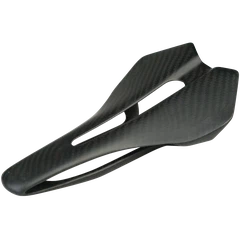
Under the padding, the saddle shell provides structure. Some shells are nylon-based, while others use reinforced or carbon fiber materials. The shell affects weight, stiffness, and overall feel.
A good saddle balances support and comfort, rather than focusing on one alone.
Carbon vs Traditional Saddle Construction
|
Feature |
Traditional Saddle (Nylon / Composite Shell) |
Carbon Saddle (Carbon Shell or Full Carbon) |
|
Shell Material |
Usually nylon or composite base |
Carbon fiber reinforced or full carbon shell |
|
Weight |
Moderate weight |
Lighter overall construction |
|
Flex Characteristics |
Designed for moderate flexibility |
Can be tuned for firmer support |
|
Ride Feel |
Slightly more forgiving under load |
More direct and firm feel |
|
Padding Thickness |
Often includes more foam or gel |
Often minimal padding in performance models |
|
Durability |
Reliable for everyday riding |
Strong when properly designed and used |
|
Target Riders |
Casual, recreational, and endurance riders |
Performance-focused or weight-conscious riders |
Who Should Consider a Carbon Saddle?
A carbon saddle is not for everyone. But for some riders, it makes practical sense.

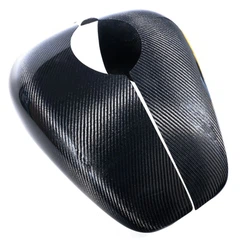
Carbon Bicycle Seat
Send Inquiry Now

Full Carbon Saddle
Send Inquiry Now
Riders Focused on Weight and Performance
If you pay close attention to overall bike weight, a carbon saddle may fit your goals.
It can reduce grams without changing your full setup. For riders building a lightweight road bike or race-focused build, small savings add up over time.
You may also prefer a firmer platform. A carbon shell often feels more direct when you apply power, especially during hard efforts.
Competitive or Performance-Oriented Riders
If you race or join fast group rides, you may notice subtle differences in stiffness and support.
A firmer saddle can feel stable under strong pedaling, especially in an aggressive riding position.
This type of saddle often works best when your bike fit is already dialed in.
Riders Who Prefer Minimal Padding
Not everyone enjoys thick foam. Some riders prefer a cleaner, more connected feel.
A carbon saddle with minimal padding may suit you if:
You ride in a forward position
You value low weight
You are comfortable with a firmer surface
It's important to remember that comfort still depends on width and fit.
A carbon saddle works best when it matches your body and riding style, not just your performance goals.
For riders exploring lightweight options, carbon saddle designs offer a different balance of weight, stiffness, and support.
Common Saddle Mistakes to Avoid
Choosing a saddle can feel simple, but small mistakes can lead to long-term discomfort. Many riders repeat the same errors without realizing it.
Choosing Based on Softness Alone
A very soft saddle may feel comfortable in the store.
On longer rides, too much padding can increase pressure on soft tissue instead of supporting your sit bones.
Support matters more than softness.
Ignoring Saddle Width
Width is often overlooked. If the saddle is too narrow, your sit bones won't rest on the supportive area. If it's too wide, you may feel rubbing or chafing.
Getting the right width can solve many comfort issues before you change anything else.
Copying Someone Else's Setup
Just because a saddle works for your friend doesn't mean it will work for you.
Body shape, flexibility, and riding position all vary.
Your saddle should fit you, not someone else.
Skipping Proper Adjustment
Even the right saddle can feel wrong if it's not set up correctly.
Height, tilt, and fore-aft position all affect comfort. Small adjustments can make a noticeable difference.
Before replacing your saddle, check your setup first.
Assuming More Expensive Means Better
A higher price does not guarantee a better fit.
The most advanced saddle will still feel uncomfortable if the width or shape is wrong for you.
Comfort comes from compatibility, not cost.
Avoiding these common mistakes can save you time, money, and frustration. The right saddle is often closer than you think.
FAQ
Q: How do I know if my saddle is too narrow?
A: If you feel pressure or numbness in soft tissue instead of firm support under your sit bones, the saddle may be too narrow. You might also notice discomfort after shorter rides.
Q: Should beginners choose a softer saddle?
A: Not always. A very soft saddle can feel comfortable at first, but may cause more pressure on longer rides. Proper width and support are usually more important than extra padding.
Q: Are carbon saddles uncomfortable?
A: Not necessarily. Carbon saddles often feel firmer, but comfort still depends on width, shape, and fit. A well-matched carbon saddle can feel stable and supportive for the right rider.
Q: Can saddle height affect comfort?
A: Yes. If the saddle is too high or too low, pressure shifts to the wrong areas. Proper height adjustment can improve comfort without changing the saddle itself.
Q: How often should I replace my saddle?
A: There's no fixed schedule. Replace it if the padding breaks down, the shell feels unstable, or comfort changes noticeably over time.
Q: Do men and women need different saddles?
A: Not always, but many riders find gender-specific designs helpful. Women's saddles are often slightly wider to match average sit bone spacing. The most important factor is still your individual fit.
Conclusion
Choosing the right bike saddle takes a bit of patience, but it makes a big difference in how you feel on the bike. The best saddle is not always the softest or the most expensive one. It's the one that supports your sit bones, matches your riding position, and stays comfortable over time.
Your body shape, flexibility, and riding style all play a role. A saddle that works for someone else may not work for you. That's normal. Small adjustments in width, shape, or tilt can change your experience more than you expect.
If you're building a lightweight bike or prefer a firmer and more direct ride feel, carbon saddle options are worth considering. At Carbon World, our carbon fiber bike saddles focus on structural strength and reduced weight while keeping real riding comfort in mind.
In the end, the right saddle helps you ride longer and with more confidence. When comfort improves, everything else feels easier.