



Introduction
When choosing a mountain bike, most riders face one key question: Should you go for a hardtail or a full suspension bike? In fact, the two differ significantly in frame structure, pedaling efficiency, riding comfort, and maintenance costs.
This easy-to-understand comparison guide will help you accurately determine which type suits you best and make a confident, hassle-free buying decision without any regrets.
Key Takeaways
To make decision-making easier, here is a simple and direct buying guide:
Choose a hardtail: If you have a limited budget and mainly ride for casual purposes, such as flat roads, climbing, and light off-road trails, and you want something easy to maintain and hassle-free, a hardtail is the most cost-effective and reliable choice with the least risk of going wrong.
Choose full suspension: If budget is not a concern and you prioritize maximum comfort, frequently ride in mountainous areas, enjoy steep descents, rough terrain, or technical trails, and want better handling and higher forgiveness on challenging surfaces, then a full suspension bike is the better option worth investing in.
What Is a Hardtail?
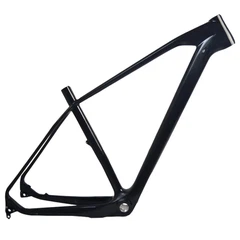
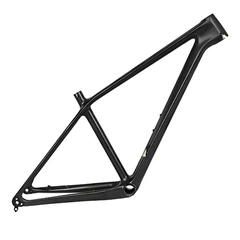
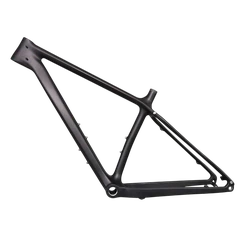
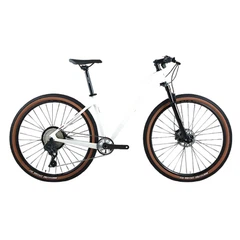
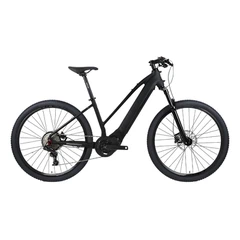
A hardtail mountain bike features a rigid rear frame with no rear suspension. It is equipped only with a front suspension fork, while the rear end has no shock absorber, linkage system, or pivot points. The frame is simple and integrated, delivering a direct and responsive riding feel with a firm and straightforward handling experience.

What Is a Full Suspension?
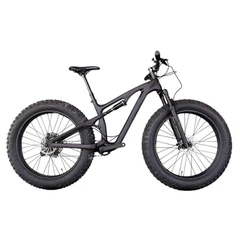
A full suspension mountain bike, also known as a "softtail," is equipped with suspension systems at both the front and rear. The rear of the bike includes a rear shock absorber and a complex linkage system (such as a four-bar linkage or single-pivot design). This allows the rear wheel to move independently to absorb impacts, maximizing shock absorption from uneven terrain and providing significantly better comfort and damping performance.

Advantages and Disadvantages of Hardtail?
Advantages of Hardtail Mountain Bikes
Higher pedaling efficiency: With no rear suspension absorbing power, every pedal stroke is transferred directly to the rear wheel. This makes climbing easier and acceleration on flat terrain faster.
Lighter overall weight: By eliminating rear shocks, linkages, and pivot systems, the bike becomes significantly lighter, making it easier to carry, handle, and accelerate.
Better value for money: The simpler structure and lower manufacturing cost mean riders can get higher-spec components at the same price range compared to full suspension bikes.
Easy and low-cost maintenance: Without complex rear suspension systems and bearings, daily upkeep is simple, mainly chain cleaning and tire pressure checks, resulting in very low long-term maintenance costs.
Disadvantages of Hardtail
Poor shock absorption on rough terrain: Vibrations from rocks, roots, and uneven surfaces are directly transferred to the rider, which can lead to discomfort and fatigue in the hands, back, and hips during long rides.
Lower stability on descents: On steep or technical downhill trails, reduced rear-wheel traction can cause slipping and offer less forgiveness, requiring higher riding skill and control.
Advantages and Disadvantages of Full Suspension?
Advantages of Full Suspension
Strong shock absorption: Front and rear suspension work together to reduce impact from rocks, roots, and rough terrain, making long rides less tiring.
Better traction and safety: The rear wheel stays more connected to the ground, improving grip on descents and technical trails, especially at higher speeds.
Smoother ride feel: Suspension softens bumps and vibrations, delivering a more controlled and comfortable riding experience on uneven terrain.
Disadvantages of Full Suspension
Lower pedaling efficiency: Some energy is lost through the suspension system, making climbing and flat riding less efficient than hardtails.
Heavier weight: Extra components like rear shocks and linkage systems increase overall bike weight.
Higher cost: More complex design and parts result in a significantly higher purchase price.
More maintenance: Suspension parts and pivot systems require regular servicing, increasing long-term upkeep costs.

Carbon Fiber 29 Mountain Bike
Send Inquiry Now

Carbon Fiber Mountain Bike
Send Inquiry Now
Hardtail vs Full Suspension
|
Project |
Hardtail |
Full Suspension |
|
Frame |
Front suspension only, rigid rear frame |
Front + rear suspension system |
|
Efficiency |
Higher, direct power transfer |
Medium, some energy loss |
|
Comfort |
Stiffer ride, more vibration |
Much smoother and more comfortable |
|
Weight |
Lighter |
Heavier |
|
Descending Control |
Less stable on rough descents |
Better stability and traction |
|
Climbing Performance |
More efficient on smooth climbs |
Better traction on technical climbs |
|
Maintenance |
Low, simple structure |
Higher requires suspension maintenance |
|
Price |
More affordable |
More expensive |
|
Terrain |
XC, gravel, light trails |
Technical trails, rocky, downhill |
|
Beginner Friendly |
More skill required |
More forgiving |
Hardtail vs Full Suspension: How Should You Choose?
The beauty of mountain biking lies in the freedom to define what "fun" means to you. There is no absolute right or wrong between hardtail and full suspension bikes-the key is whether the bike matches your riding style.
Riding Preference
Some riders naturally prefer hardtails for their simple structure and direct trail feedback, creating a more connected riding feel.
For XC riding, cross-country trails, dirt jumps, or technical skill-based riding, hardtails feel lighter, more responsive, and deliver a more direct, pure riding experience.
Budget Consideration
Full suspension bikes are usually more expensive due to their complex design. In comparison, hardtails often offer better components at the same price, making them a more cost-effective option.
If your budget is limited, a hardtail is the safest entry-level choice. If the budget allows, a full suspension bike provides a more comfortable and complete riding experience.
Structure & Maintenance
Hardtails have a simple frame without rear shocks or linkage systems, meaning lower maintenance costs and easier daily care.
Full suspension bikes require regular servicing of shocks and pivot bearings. Although maintenance is higher, they deliver better comfort and performance on rough terrain.
Summary
Hardtails prioritize efficiency, practicality, and value for money, while full-suspension bikes emphasize comfort, performance, and versatility. There is no single "absolute best" option; rather, the ideal choice is the model that best suits your specific riding terrain and habits.
Do not blindly follow trends by rushing to purchase a full-suspension bike, nor should you be swayed solely by low prices into choosing a low-spec hardtail. By carefully considering your riding environment, budget, and riding style, you can select a quality bicycle that will serve as a reliable companion for many rides to come.
FAQ
Q: For beginners, which is better: hardtail or full suspension?
A: Generally, hardtail bikes are better for beginners. They are lighter, simpler, and more affordable, and they help riders develop essential skills such as balance, line choice, and bike handling.
Q: Can a hardtail handle rough trails?
A: Yes, but with limitations. Hardtail bikes can handle moderate off-road and forest trails, but on rocky or highly technical terrain, the ride becomes harsher and less stable compared to full suspension bikes.
Q: Which bike is easier to maintain?
A: Hardtail bikes are much easier to maintain. With no rear suspension system, there are fewer moving parts, which means lower maintenance time, cost, and overall effort.
Q: Which bike is faster?
A: It depends on the terrain. On smooth climbs and paved surfaces, hardtails are often faster due to better power transfer. On rough, technical downhill trails, full suspension bikes are faster and offer more stable control.
Q: How do I choose between them?
A: Choose based on your riding style:
Smooth trails, fitness riding → Hardtail
Technical terrain, downhill riding, comfort-focused riding → Full suspension