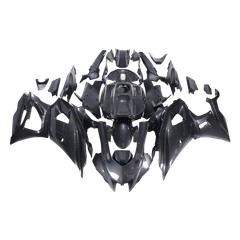
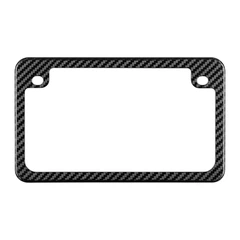
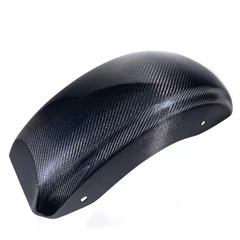
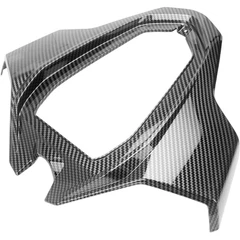


Carbon fiber motorcycle parts may look simple from the outside, but making them well takes more than just carbon material. The real work starts with the mold, the shaping process, and how accurately the part fits the motorcycle. A carbon fiber front fender, fairing, or fuel tank cover needs to look clean, stay lightweight, and match the mounting points correctly at the same time.
That is why manufacturing quality matters so much.
Some carbon motorcycle parts are made mainly for appearance, while others also need a stable structure and consistent fitment. Different parts often require different molding methods, curing processes, and finishing work. If you are developing OEM or custom carbon fiber motorcycle parts, understanding how these parts are actually made can help you choose better materials, better production methods, and more reliable suppliers.
Key Takeaways
Carbon fiber motorcycle parts are not only about using lightweight material. The real quality depends on mold accuracy, layup control, curing method, trimming, surface finish, and final fitment on the motorcycle.
Simple parts like license plate frames or small covers are easier to make, while fairings, fuel tank covers, saddlebags, and other curved parts need more precise molds and repeated fitment checks.
Different production methods, such as hand layup, vacuum bagging, prepreg molding, and high-pressure forming, affect strength, weight, surface quality, and cost.
What Carbon Fiber Motorcycle Parts Are
Carbon fiber motorcycle parts are components made with carbon fiber instead of traditional metal or plastic materials. They are commonly used on sport bikes, touring motorcycles, custom motorcycles, and aftermarket modification projects. Some riders choose them for lower weight, while others focus more on appearance, corrosion resistance, or custom styling.

These parts include both small covers and larger body components.
Common examples include:
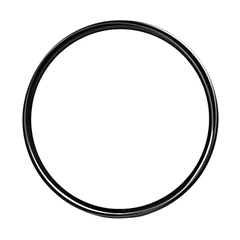
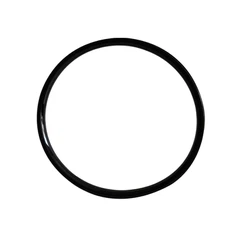
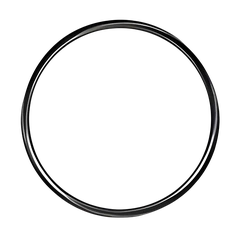
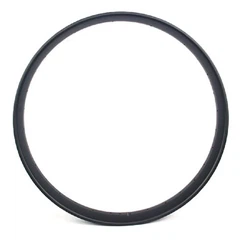
Carbon Fiber License Plate Frames
Carbon Fiber Fenders
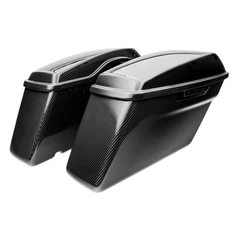
Carbon Fiber Bags
Different parts often require different manufacturing methods. Small trim pieces are usually easier to produce, while larger parts with complex curves and mounting points need more precise molds, forming control, and finishing work. Surface quality and fitment also become more important as the part design becomes more complex.
Why Carbon Fiber Is Used for Motorcycle Parts
Carbon fiber is used in motorcycle parts for several practical reasons. Different riders may care about different benefits, but weight, appearance, and long-term durability are usually the main factors.
Lower Weight
Many carbon fiber motorcycle parts are lighter than traditional metal components. This can help reduce unnecessary weight on the bike, especially on larger body parts like fairings, bags, or fenders. For some riders, lighter parts are also easier to handle during installation or replacement.
Clean Appearance
Carbon fiber has a distinctive woven surface that gives motorcycle parts a cleaner and more custom look. Gloss and matte finishes are both common, depending on the style you want.
Better Corrosion Resistance
Unlike some metal parts, carbon fiber does not rust. This can be useful for motorcycles exposed to rain, humidity, road dirt, or long-term outdoor use. Surface coatings still matter, but the material itself handles corrosion differently from steel or untreated metal parts.
Common Carbon Fiber Motorcycle Parts and Their Manufacturing Difficulty
Not all carbon fiber motorcycle parts are equally difficult to make. The complexity usually depends on the shape, size, and required fitment of the part. Understanding the difficulty helps you know what to expect from production and cost.
Easier Parts
Some parts are relatively simple to manufacture. These usually include small, flat, or mostly uniform components. Examples are:
Carbon Fiber License Plate Frames
Trim Covers
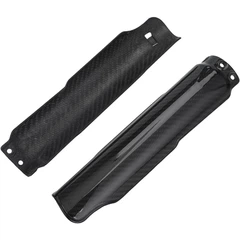
Carbon Fork Guards

Carbon Fiber License Plate Frame(4 hold)
Send Inquiry Now

Carbon Fiber License Plate Frame(2 hold)
Send Inquiry Now

Carbon Fiber License Plate Frame
Send Inquiry Now

Carbon Fiber License Plate Frame
Send Inquiry Now

Carbon Fiber Fork Guards
Send Inquiry Now

Carbon Fiber Fork Guards
Send Inquiry Now
These parts require fewer layers of carbon fiber, simpler molds, and less finishing work, making them faster to produce and easier to handle.
Medium-Difficulty Parts
Parts with moderate curves, mounting points, or functional requirements are more challenging. They include:
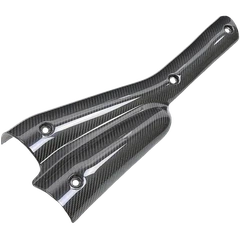
Carbon Exhaust Heats Shields
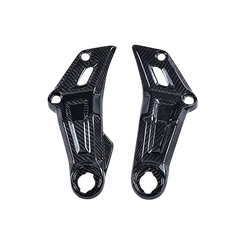
Carbon Frame Covers

Carbon Fiber Harley Fenders
Send Inquiry Now

Carbon Exhaust Heats Shields
Send Inquiry Now

Carbon Fiber Frame Cover
Send Inquiry Now
These need careful molding, precise layup, and controlled curing to ensure the part fits correctly on the motorcycle and maintains structural integrity.
More Complex Parts
Large or highly contoured parts demand the most attention. They include:
Carbon Saddlebags
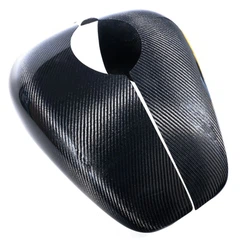
Carbon Fuel Tanks

Carbon Fiber Fairings
Send Inquiry Now

Carbon Saddlebags
Send Inquiry Now

Carbon Fuel Tanks
Send Inquiry Now
These require advanced mold design, multiple carbon layers, autoclave or vacuum curing, and thorough trimming and finishing. Achieving both strength and a smooth surface can be challenging, and fitment checks are essential.
Main Ways to Make Carbon Fiber Motorcycle Parts
Carbon fiber motorcycle parts can be made using different methods, each suited for specific shapes, volumes, and finishes. The choice of method affects both production quality and cost.

Hand Layup
Hand layup is the most straightforward method. Layers of carbon fiber fabric are placed by hand into a mold and coated with resin. This method works well for simple shapes or low-volume production. It allows flexibility but requires careful attention to avoid air bubbles and uneven resin distribution.
Vacuum Bagging
Vacuum bagging improves part quality by using suction to compress the carbon layers and remove excess resin. The process produces stronger, lighter, and more uniform parts compared to basic hand layup. It is commonly used for medium-difficulty components like fenders and frame covers.
Prepreg Molding
Prepreg molding uses carbon fiber pre-impregnated with resin. These sheets are laid in molds and then cured under heat and pressure, often in an autoclave. This method is ideal for high-performance, large, or highly contoured parts such as fairings and fuel tanks, delivering excellent strength, surface finish, and dimensional accuracy.
Compression or High-Pressure Forming
Compression or high-pressure forming applies mechanical pressure during curing. This method is used for large or complex components requiring precise dimensions and strong structural performance. It ensures both fitment and smooth, professional-looking finishes for premium motorcycle parts.
Basic Manufacturing Process
Making a carbon fiber motorcycle part requires careful steps to ensure strength, fit, and appearance. Each stage affects the final quality, so following the process closely is essential.
Mold Preparation
The first step is preparing the mold. It must match the part's shape exactly and have a smooth surface. Any imperfections in the mold will show up in the finished part. Applying a release agent ensures the part can be removed cleanly.
Material Cutting and Layup
Next, carbon fiber sheets or prepregs are cut to size. They are layered onto the mold according to the required thickness and orientation. Proper fiber alignment is critical for structural performance and aesthetics. Each layer is carefully smoothed and positioned before moving on to the next.

Curing and Forming
The layered part is then cured. This can be done in an oven, autoclave, or under vacuum pressure, depending on the method used. Heat and pressure allow the resin to bond and the fibers to set, forming a rigid, durable structure.
Trimming and Finishing
Once cured, excess material is trimmed, and edges are cleaned. Surface finishing may include sanding, polishing, or applying a clear coat. This step ensures the part looks professional and meets visual standards.
Fitment Check
Finally, the part is tested for fit on the intended motorcycle. Mounting points, curves, and alignment are checked to ensure installation is precise. Any minor adjustments are made before the part is approved for use or sale.
What Makes a Carbon Fiber Motorcycle Part Look Good and Fit Well
The quality of a carbon fiber motorcycle part depends not only on the material but also on how it is handled during manufacturing. Even small mistakes can affect appearance or fit, so attention to detail is critical.
Clean Edge Trimming
Proper edge trimming ensures that all excess material is removed without damaging the weave. Clean edges help the part sit flush on the motorcycle and improve both aesthetics and safety during installation.
Consistent Weave Appearance
The carbon fiber pattern should be uniform across the entire part. Misaligned fibers or inconsistent layering can create visual defects and reduce structural performance. A consistent weave enhances the part's professional look.
Accurate Mounting Points
Precise mounting holes and alignment features are essential for proper fit. Parts that don't align correctly can be difficult to install or may stress other components, which could lead to failure over time.
Stable Surface Finish
The surface finish affects both appearance and durability. Gloss or matte coatings must be applied evenly, without bubbles or streaks. A stable finish protects the part from UV exposure, scratches, and minor impacts, while also giving it a polished, high-end look.
How OEM Carbon Fiber Motorcycle Parts Are Manufactured
OEM carbon fiber motorcycle parts require more than copying the shape of an existing component. The process focuses on mold accuracy, fitment testing, finish consistency, and stable batch production. The goal is not only to make one good part, but to produce the same quality repeatedly.

Motorcycle Data and Mold Development
Production usually starts with motorcycle measurements or 3D scanning. Accurate molds are important because small dimensional errors can affect mounting alignment and fitment, especially on larger parts like fairings or fuel tanks.
Prototype Testing and Fitment Adjustment
The first samples are tested directly on the motorcycle. Mounting points, edge clearance, and installation position may need adjustment before production becomes stable.
Surface and Finish Consistency
OEM parts need a consistent weave appearance, trimming quality, and gloss or matte finish. Uneven surfaces or distorted weave patterns can affect the final appearance.
Stable Batch Production
Once production starts, curing, layup, trimming, and inspection all need to remain consistent. This helps reduce variation between batches and keeps fitment more reliable.
Common Problems in Carbon Fiber Motorcycle Part Production
Even experienced manufacturers can encounter issues when making carbon fiber motorcycle parts.
Poor Fitment: Parts that don't match the bike's mounting points or contours are difficult to install. Poor fitment can cause stress on other components and affect the motorcycle's overall performance.
Air Bubbles or Excess Resin: Trapped air or too much resin can weaken the part and create visible surface defects. Careful layering and proper vacuum techniques are essential to prevent these issues.
Uneven Finish: Inconsistent sanding, polishing, or coating can lead to streaks, dull spots, or uneven gloss. This affects both the visual appeal and the protective properties of the part.
Inconsistent Batch Quality: Small variations in material, curing, or trimming between batches can result in parts that differ in strength, fit, or appearance. Maintaining strict quality control ensures each part meets the same standard.
Why Some Carbon Fiber Motorcycle Parts Are Harder to Manufacture
Some carbon fiber motorcycle parts are much harder to produce than others. The difficulty usually comes from the shape of the part, the mounting structure, and the finish quality required.
Complex Curves and Deep Shapes
Parts like fairings and fuel tanks often have deep curves and uneven surfaces. Carbon fiber needs to follow these shapes accurately during layup and curing, which makes mold design and forming control more difficult.
Thin Edges and Mounting Areas
Thin edges and mounting points can become weak if the carbon layers are not positioned correctly. These areas also require more careful trimming and alignment during production.
Surface Finish Requirements
High-gloss or exposed carbon finishes make small defects easier to see. Uneven weave patterns, sanding marks, or surface distortion can affect the final appearance of the part.
Consistent Batch Production
Making one good part is easier than making the same part repeatedly. OEM production requires stable curing, accurate trimming, and consistent fitment across every batch.
Conclusion
Making carbon fiber motorcycle parts involves much more than shaping carbon material into a motorcycle component. Mold accuracy, layup control, curing stability, trimming quality, and fitment testing all affect the final result. Smaller parts may be easier to produce, but larger or more complex components often require more precise manufacturing control and repeated adjustments during development.
The difference usually becomes visible in the final fit and finish.
If you are developing OEM or custom carbon fiber motorcycle parts, it helps to work with a manufacturer that understands both production consistency and real motorcycle fitment requirements. Carbon World supports custom carbon motorcycle part development for different motorcycle models, including mold development, prototype testing, surface finish options, and OEM or low-volume production support.
FAQ
Q: Can carbon fiber motorcycle parts be repaired if damaged?
A: Some minor surface damage can be repaired, but deeper cracks or structural damage may require replacement or professional repair work.
Q: Why do some carbon fiber motorcycle parts turn yellow over time?
A: Poor UV protection or lower-quality clear coating can cause discoloration after long-term sun exposure.
Q: Are exposed carbon fiber parts stronger than painted parts?
A: Not always. Surface appearance does not directly determine structural strength. Internal layup and manufacturing quality matter more.
Q: Can carbon fiber motorcycle parts be made for older motorcycle models?
A: Yes, but mold development and fitment work may take longer if original data or parts are limited.
Q: Why are some carbon fiber motorcycle parts much more expensive than others?
A: The price difference often comes from mold quality, manufacturing method, finish consistency, and fitment accuracy rather than material alone.
Q: What information is usually needed for a custom carbon fiber motorcycle part project?
A: Manufacturers may need motorcycle model details, reference parts, dimensions, photos, or 3D data depending on the project.
Q: Can custom logos or branding be added to carbon fiber motorcycle parts?
A: Yes. Logos, decals, packaging, and other branding details can often be added during finishing or packaging.