

Choosing the right crank arm length can improve your comfort, pedaling efficiency, and long-term joint health. Many riders wonder whether 170mm or 175mm is better, if shorter cranks increase cadence, or whether longer cranks produce more power. The truth is that crank length affects how your hips and knees move, how torque is applied, and how smoothly you maintain rhythm.
On modern bikes, especially stiff carbon fiber frames, small fit adjustments can feel more noticeable. A crank that is too long may cause knee strain or pedal strikes. Too short, and you may lose leverage.
What Is Crank Arm Length?
Crank arm length is the distance from the center of the bottom bracket spindle to the center of the pedal axle. It is usually measured in millimeters, with common sizes including 165mm, 170mm, 172.5mm, and 175mm.
This measurement determines the size of the pedaling circle your feet travel. A longer crank creates a larger circle and more leverage. A shorter crank creates a smaller circle and allows faster cadence with less joint compression.
Even a difference of 2.5mm can slightly change how your knees, hips, and ankles move during each pedal stroke. That is why choosing the correct crank arm length is not just about power - it is about biomechanics and efficiency.

Does Crank Arm Length Affect Power?
Many riders believe that longer crank arms automatically produce more power. The idea sounds simple: a longer lever should create more torque. While this is partly true, the real picture is more complex.
A longer crank can increase leverage, which may help generate slightly more torque at a lower cadence. However, longer cranks also increase the size of the pedaling circle. This means your knees and hips must travel further with each rotation. For some riders, this reduces cadence efficiency and increases joint stress.
Shorter cranks reduce the range of motion at the hip and knee. This often allows a smoother spin and higher cadence. In many real-world studies, overall power output differences between crank lengths are small when properly fitted.
In practice, power depends more on rider biomechanics and comfort than on crank length alone. The best crank arm length is the one that allows you to produce power efficiently without strain.
Crank Arm Length vs Rider Height
Rider height and inseam length are the most common starting points when choosing crank arm length. While there is no single perfect number for everyone, certain ranges work well for most riders.
Below is a general guideline:
| Rider Height | Recommended Crank Length |
|---|---|
| Under 165 cm (5'5") | 165 mm |
| 165–175 cm (5'5"–5'9") | 170 mm |
| 175–183 cm (5'9"–6'0") | 172.5 mm |
| Over 183 cm (6'0"+) | 175 mm |
This table provides a starting point, not a strict rule. Two riders of the same height may prefer different crank lengths depending on inseam proportion, flexibility, and riding position.
A more precise method is to measure your inseam and multiply it by 0.216 to 0.23. The result gives a suggested crank length range in millimeters. However, real-world testing is still important.
Short vs Long Crank Arms: Pros and Cons
Choosing between shorter and longer crank arms depends on your riding style, body proportions, and flexibility. The difference may seem small, often just 2.5mm, but it can change how your legs move and how comfortable you feel over long rides.

Advantages of Shorter Crank Arms
Shorter cranks create a smaller pedaling circle. This reduces hip and knee flexion at the top of the stroke. For many riders, this means less joint compression and smoother cadence.
They also make it easier to maintain a high RPM. Riders in aggressive aero positions often benefit from shorter cranks because they allow better hip clearance and improved breathing.
Disadvantages of Shorter Crank Arms
Shorter cranks slightly reduce leverage. Some riders feel they lose a bit of torque when climbing at low cadence. The difference is usually small, but it can feel noticeable to those used to longer arms.
Riders with long legs may also feel that shorter cranks limit their natural range of motion.
Advantages of Longer Crank Arms
Longer cranks provide more leverage per pedal stroke. This can feel helpful during seated climbs or when riding at a lower cadence. Taller riders sometimes prefer this feeling of mechanical advantage.
They may also feel more natural for riders who are accustomed to traditional 172.5mm or 175mm setups.
Disadvantages of Longer Crank Arms
Longer cranks increase the size of the pedaling circle. This raises hip and knee flexion, which can cause discomfort if flexibility is limited.
They also reduce pedal clearance. On gravel or MTB bikes, this increases the risk of pedal strikes. In aero positions, longer cranks can make it harder to maintain smooth breathing and hip rotation.
Choosing Crank Length by Riding Style
The riding type contributes to crank selection a great deal. The suitable size for one purpose may not fit for another. Carbon fibre frames are performance-oriented, so crank fit must help your speed, your comfort, performance, and handling.
Road Racing
Road racers usually ride in a low and aggressive position. The shorter cranks will get you moving quicker and provide you with a more comfortable ride. This enables one to breathe better and move with ease. On carbon bikes, this also maintains your posture at a balanced level in sprinting and on climbs.
Long Distance
You must prioritize comfort over power in endurance riding. The crank length must be decreased to create less strain and maintain a constant speed. Short and mid-length cranks tend to be the best. They make you ride longer with low pressure on your knees and hips.
Climbing
Climbers can feel that the longer cranks will provide better leverage. When doing heavy climbs, however, force is not as important as efficiency. A fitted crank will make you fit and be seated as well as keep up with cadence. On carbon bicycles, shorter cranks help with the ground clearance and control.
Time Trials and Triathlons
During time trial situations, you are in close and forward positions. With short cranks, you have space to ride. They lessen the tension of the hips and enhance aerodynamics. This is conclusive on carbon frames, where aero shaping must be perfectly fit.
Gravel and Mixed Terrain
Gravel riders will demand better clearance and easy functioning in rough terrain. Long crank arms may strike rocks or be harmful to the joints during long rides. Shorter or middle-sized cranks provide more control, a quicker spin, and fewer pedal hits.

Practical Tips for Measuring and Testing Crank Length
The optimum crank length selection is a careful procedure that involves measurement and practical testing. These are the practical steps that you can follow to get the best fit for your carbon fibre bike.
Measure Your Inseam Correctly
Hold yourself in an upright position, with feet a little bit more than fifteen centimetres apart. Use a hard ruler or a tape measure to measure the floor to your crotch. This is the measure used to determine the crank length.
Calculate Your Crank Length Range
Multiply your inseam length by variables that range between 0.216 and 0.23. It provides a suggested range of crank length in millimeters. The precise factor is based on the way you ride and your comfort.
Consider Your Bike's Geometry
The frames made of carbon fibre tend to be tighter. Look out to see whether longer cranks would strike the frame or the ground. Other carbon designs prefer using shorter cranks to allow clearance on the pedals.
Test Different Crank Lengths
Assuming you can, put cranks of different lengths on your bike. Lots of bike stores have the ability to change cranks to test them. Take note of the feeling of your legs and knees in the course of these trials.
Watch for Pedal Clearance Issues
During the test, ensure that your pedals are not hitting the ground in turns. There can also be an issue with toe overlap with the front wheel. These are problems that are typical of compact carbon frames with longer cranks.
Adjust Saddle Height After Changes
It is important that whenever you change your crank length, you should also change your saddle height. A well-adjusted saddle means that one will pedal efficiently, and there will be less strain on the joints. This is a measure that will enable you to have comfort and power during your rides.
Common Mistakes When Choosing Crank Arm Length
Selecting crank arm length is often treated as a simple number choice. In reality, small mistakes can affect comfort, efficiency, and long-term joint health.
Relying Only on Rider Height
Height is a useful starting point, but it does not tell the full story. Two riders of the same height may have different inseam lengths, flexibility, or riding positions. Choosing crank length based only on height can lead to a setup that feels awkward or strained.
Choosing the Longest Crank for More Power
Many riders assume that longer cranks automatically produce more power. While they increase leverage slightly, they also increase joint range of motion. In practice, comfort and cadence efficiency matter more than maximum leverage.
Ignoring Pedal Clearance
Longer crank arms reduce ground clearance. On gravel or mountain bikes, this increases the risk of pedal strikes. On compact road frames, it may also increase toe overlap. Clearance should always be considered before moving to a longer crank.
Forgetting to Adjust Saddle Height
Changing crank length without adjusting saddle height creates fit problems. A longer crank effectively lowers your saddle relative to the pedal stroke, while a shorter crank raises it. Always adjust saddle height after changing crank arms to maintain smooth leg extension.
Rushing the Decision
Crank length differences are small, often 2.5mm. The effects may not be obvious in a short ride. Testing over several rides gives better feedback than making a quick decision based on feel alone.
Choosing the Right Carbon Crank Arm
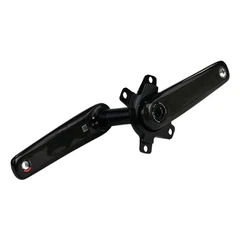
Once you have determined the correct crank arm length for your body and riding style, material choice also plays an important role. Carbon fiber cranks offer a combination of stiffness, low weight, and vibration damping that can enhance pedaling efficiency.
Compared to traditional aluminum options, carbon cranks reduce rotational weight while maintaining structural strength. For riders seeking performance gains on road, gravel, or mountain bikes, selecting the correct crank length together with a high-quality carbon crank arm creates a more balanced and responsive ride.
For riders looking for a precision-built carbon fiber crank in multiple length options, Carbon World provides engineered solutions designed for performance and durability. Matching crank length and material quality ensures optimal efficiency on modern carbon frames.

Send Inquiry Now

Send Inquiry Now

Send Inquiry Now

Send Inquiry Now

Send Inquiry Now
Conclusion
Choosing the right crank arm length is not about selecting the longest option for more power. It is about finding the length that matches your body proportions, riding style, and bike geometry.
Small differences in crank length can change cadence rhythm, joint angles, and pedal clearance. For many riders, comfort and smooth efficiency matter more than maximum leverage. A well-fitted crank allows consistent power output without unnecessary strain on the knees or hips.
Height charts and formulas provide a useful starting point, but real-world testing and proper saddle adjustment make the biggest difference.
When paired with a well-designed frame and quality components, the correct crank arm length helps you ride longer, climb efficiently, and maintain control across different terrains. Thoughtful setup always delivers better results than chasing numbers alone.
FAQ
Q: What is the best way to measure for crank arm length?
A: Measure your inseam standing barefoot, then multiply by a factor between zero point two one six and zero point two three. Use this as a starting range, adjusting for riding style and bike fit.
Q: Can I use longer cranks on a carbon fibre bike?
A: Longer cranks may increase power but risk pedal strikes and clearance issues on carbon frames. It is best to test different lengths and consider your riding position carefully.
Q: How often should I check my carbon fibre crank arms for damage?
A: Inspect your crank arms regularly, especially after any impacts or crashes. Early detection of cracks or chips prevents serious failure.
Q: Is crank length more important than frame size?
A: Frame size determines overall geometry and reach. Crank length fine-tunes how your legs move within that geometry. Both matter, but crank length adjustment is a smaller, more precise fit change.
Q: Does crank length affect climbing?
A: Longer cranks can feel helpful during low-cadence climbing because of increased leverage. However, the actual difference in power is small when properly fitted. Efficient cadence and comfort often matter more than crank length alone.
Q: Is there a trend toward shorter cranks in modern bike fitting?
A: Yes. In recent years, many bike fitters have recommended slightly shorter cranks than traditional standards. The shift is based on improved understanding of biomechanics, hip angle optimization, and cadence efficiency.