





Introduction
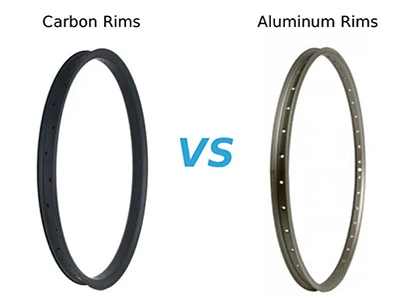
Carbon fiber bicycle rims, renowned for their lightweight strength and low aerodynamic drag, have evolved from professional racing applications to widespread use in everyday cycling, becoming a key component in enhancing riding performance. Compared to traditional aluminum rims, high-quality carbon fiber rims can reduce weight by 30%–50%, while offering superior fatigue resistance and stiffness.
However, their manufacturing process demands extremely high standards in materials, technology, and precision. Every step must be carefully controlled and executed with accuracy. Today, we'll take a deep dive into the complete manufacturing process of carbon fiber rims and uncover the secrets behind these "lightweight performance machines."
Quick Answer
Carbon rims are manufactured by cutting carbon fiber prepreg sheets, placing them into precision molds according to a designed layup schedule, curing them under controlled heat and pressure, and then trimming, drilling, finishing, and testing the final rim. The most important steps are material selection, fiber orientation, curing control, and final quality inspection.
What Are Carbon Rims
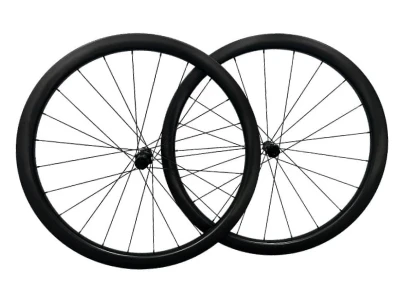
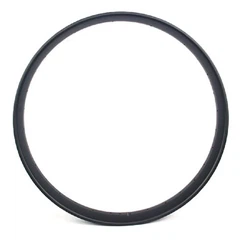
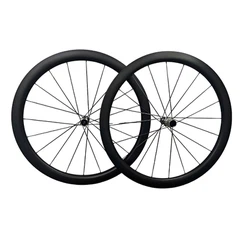
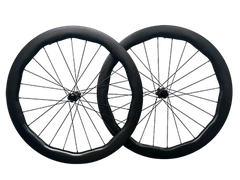
Carbon fiber rims are bicycle rims made from layered carbon fiber composite materials, designed to achieve an optimal balance between lightweight performance, high stiffness, and aerodynamic efficiency. They are widely used in road cycling, gravel riding, and various high-performance bike setups, where speed, responsiveness, and precise handling are essential.
Why Manufacturing Precision Matters:
Carbon fiber rims are produced through a layer-by-layer layup process, where the orientation of the fibers and the distribution of resin directly determine the rim's strength and stiffness. Even slight deviations during the layup or curing stages can lead to uneven stress distribution, which may negatively affect overall performance and long-term reliability.

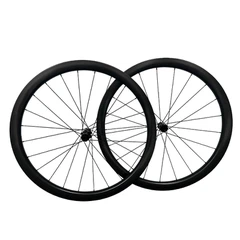
Carbon Rims For Road Bike
Send Inquiry Now

Carbon Fiber Mountain Bike Rims
Send Inquiry Now

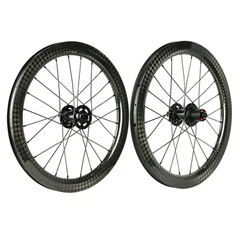
Carbon Rims BMX
Send Inquiry Now

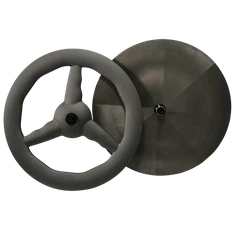
Carbon Rims Gravel
Send Inquiry Now

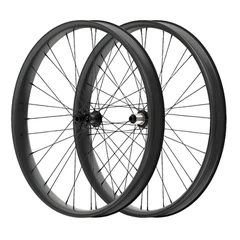
Carbon Fiber Fat Bike Rims
Send Inquiry Now
Why Layup Design Matters in Carbon Rim Manufacturing
Layup design directly affects the strength, stiffness, weight, and durability of a carbon rim. During manufacturing, carbon fiber layers cannot be placed randomly. The direction and position of each layer must be designed according to real load conditions.
High-stress areas such as the spoke holes, bead seat, valve hole, and sidewalls usually require extra reinforcement. If the layup design is not properly optimized, the rim may become too heavy, lack stiffness, or be more likely to crack under impact or high spoke tension.
Different rim applications also require different layup strategies. Road rims focus more on lightweight performance and stiffness, while gravel and mountain bike rims place greater emphasis on impact resistance and long-term durability. A good layup design is the key to balancing weight, strength, and stability.
Pre-Production Preparation
Material Preparation:
Carbon fiber is typically used in T700 and T800 grades. T800 offers higher strength and modulus, making it ideal for mid-to-high-end rims with improved fatigue life, while T700 provides an excellent balance of stiffness, weight, and cost for general applications. Materials are supplied as prepreg, including unidirectional (UD) sheets for structural strength and woven fabrics (3K, 12K) mainly for surface finishing and aesthetics. In high-stress areas, some high-end rims incorporate aramid fiber layers to enhance interlaminar strength.
The resin system is usually high-temperature epoxy, requiring good impregnation, stable curing, and impact resistance. Resin content is strictly controlled at 38±2%-too much increases weight, while too little weakens bonding and may cause cracking.
Auxiliary materials such as release agents, sealing tapes, and vacuum bags are also essential, as they directly influence molding quality.

Design and Modeling
Design must balance performance and real-world use (road, racing, MTB) while meeting industry standards. Using CAD modeling, engineers define rim dimensions, spoke hole layout, and layup structure. Reinforcement is added in high-stress areas like spoke holes.
Mold Preparation
High-precision CNC-machined aluminum molds (±0.1 mm tolerance) are commonly used, with some high-end applications using steel molds for durability. Molds are polished, designed with draft angles, and pre-coated with release agents to ensure smooth demolding and protect surface quality.
Core Production Process
Prepreg Layup
Layup is the foundation of carbon rim manufacturing. Prepreg sheets are applied layer by layer onto the mold according to the design, ensuring precise fiber orientation, uniform distribution, and no wrinkles or air pockets-factors that directly affect structural performance.
Prepreg Cutting:
Prepreg materials are cut into specific shapes and sizes using CNC cutting machines to minimize waste and improve accuracy. For advanced processes like AFP (Automated Fiber Placement), prepreg is slit into narrow tapes (3–6 mm) for precise robotic placement.

Layup Operation:
Skilled technicians place each layer onto the mold following strict fiber orientation requirements. Each layer is compacted using specialized tools to remove trapped air and ensure proper bonding. Fiber directions are carefully controlled-radial fibers handle tensile loads, while layered structures enhance overall strength. Layup thickness varies by application, typically 5–7 layers for standard rims and 10+ layers for high-performance models.
Molding and Curing
Once the layup is complete, the rim undergoes high-temperature and high-pressure curing, allowing the resin to flow and fully bond the fibers. Common methods include autoclave curing, compression molding, and resin transfer molding (RTM). This stage determines the rim's final strength, stiffness, and dimensional stability.
Demolding
After curing, the mold and rim are cooled to room temperature before removal. The rim is carefully separated using specialized tools to avoid edge damage or surface scratches. For complex structures, release agents assist in smooth demolding. The result is a raw carbon rim blank, ready for finishing processes.
Post-Processing
After demolding, the raw rim still has excess resin, burrs, and dimensional deviations. This stage is critical-precision finishing directly affects wheel assembly, durability, and ride quality.
Trimming and Sanding
The rim is first trimmed using grinders and abrasives to remove flash, resin overflow, and excess prepreg. Key areas such as the rim edges, spoke hole zones, and valve hole are carefully refined to ensure a smooth, uniform surface. Controlled sanding is essential to avoid cutting into the carbon layers or altering the rim's geometry.
Drilling and Threading
Spoke holes and valve holes are drilled according to design specifications using specialized drill bits with controlled speed and depth. This prevents fiber delamination or cracking. After drilling, spoke holes may be threaded or reinforced, and in high-end rims, metal inserts can be added to improve pull-out strength and long-term durability.
Surface Finishing
Fine Sanding and Polishing
The rim surface is refined with fine abrasives to remove marks and reveal a consistent carbon pattern (UD, 3K, 12K). For painted rims, additional smoothing ensures proper coating adhesion.
Protective Coating
A clear coat (2–3 layers) is applied to protect against UV exposure, wear, and corrosion while enhancing gloss. The rim is then low-temperature cured to ensure coating stability and prevent defects such as peeling or uneven finish.
Final Inspection
The safety of carbon fiber rims is critical, making final inspection the last line of defense in the production process. Every rim must undergo comprehensive testing, and any non-conforming product is strictly rejected.
Visual Inspection
Each rim is carefully checked for surface quality. There must be no cracks, scratches, paint defects, or resin overflow. The carbon fiber pattern should be clear and uniform, without delamination, voids, or bubbles. The positions of spoke holes and valve holes are also verified for accuracy, ensuring correct dimensions, no burrs, and no deformation.
Dimensional and Precision Inspection:
Using specialized measuring tools such as calipers and rim gauges, key parameters, including diameter, width, roundness, and flatness, are inspected. Dimensional tolerances are typically controlled within ±0.1 mm. Radial runout is also measured to ensure proper wheel alignment and performance.
Performance Testing
Selected samples undergo mechanical testing, including impact resistance, fatigue testing, tensile strength, and bending stiffness evaluation. These tests ensure the rim can withstand real riding conditions. For mid-to-high-end rims, bending stiffness typically meets or exceeds 11 kN·m/rad. Dynamic balance is also tested to prevent vibration during riding.
Conclusion
The manufacturing of carbon fiber rims is a highly specialized process in which material selection, layup precision, and curing technology work together to determine the final performance of the product. From raw carbon fiber sheets to finished rims, every stage has a direct impact on strength, weight, and overall riding quality.
If you are sourcing carbon fiber rims for your brand or a specific project, choosing a manufacturer with strong expertise in layup design, molding processes, and quality control is essential.
FAQ
Q: How long does it take to manufacture a carbon fiber rim?
A: The full manufacturing process typically takes several days to over a week, depending on production scale and complexity. This includes prepreg layup, curing, cooling, post-processing, and final inspection. High-end rims with stricter quality control may require additional time.
Q: What type of carbon fiber is used in rim production?
A: Most carbon rims use T700 or T800 carbon fiber prepreg. T700 offers a good balance of cost and performance, while T800 provides higher strength and stiffness, making it more suitable for mid-to-high-end rims.
Q: What is the most important step in carbon rim manufacturing?
A: The layup process is one of the most critical stages. Fiber orientation, layering sequence, and resin distribution directly affect the rim's strength, stiffness, and durability. Poor layup can lead to structural weaknesses.
Q: Are carbon rims handmade or machine-made?
A: Most carbon rims are produced through a combination of manual layup and controlled manufacturing processes. Skilled technicians perform the layup, while machines are used for cutting, curing, and finishing to ensure precision and consistency.
Q: What affects the quality of a carbon rim?
A: Key factors include material grade, layup design, molding technology, curing conditions, and quality control standards. Even small variations in these areas can significantly impact performance and reliability.
Q: Can carbon rims be customized for OEM projects?
A: Yes, carbon rims can be fully customized. Options include rim depth, width, drilling patterns, surface finish, and branding. OEM manufacturing allows brands to develop products tailored to specific performance and market requirements.