

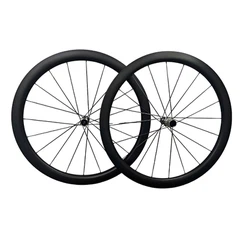
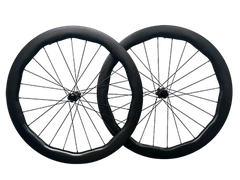
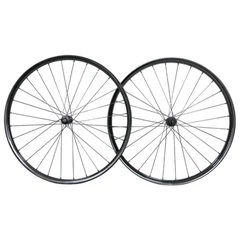
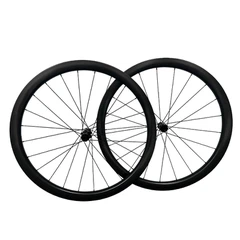
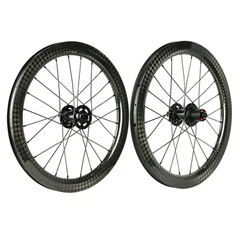
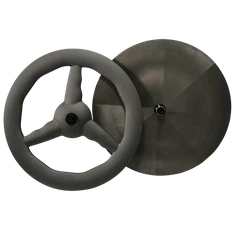
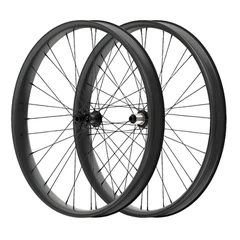
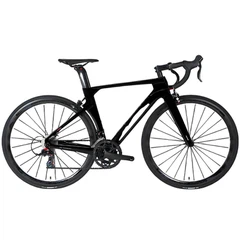
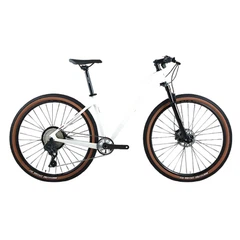
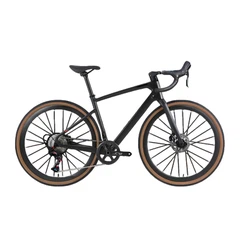
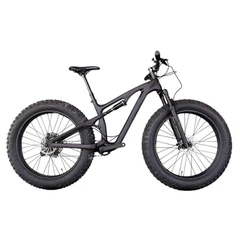
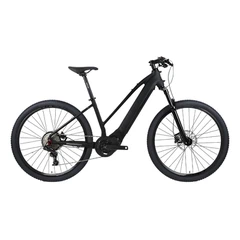
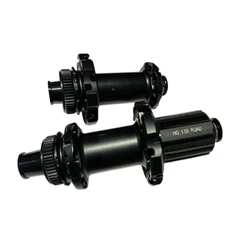
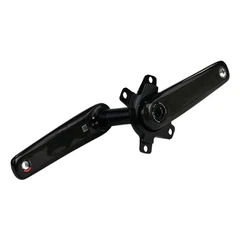


As high-end bicycle components, carbon fiber gravel wheelsets are highly sought after by professional cyclists for their lightweight and high-strength properties. However, their unique material properties and structural design place special demands on logistics and transportation, requiring targeted measures in packaging, transportation methods, and warehousing management to ensure product safety.
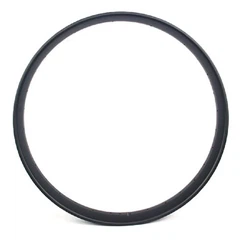
Physically, carbon fiber gravel wheelsets are constructed from multiple layers of carbon fiber prepreg molded under high temperature and high pressure. While they possess excellent tensile strength, they are also sensitive to external impact and compression. While the anti-gravel coating on the rim edge enhances durability, it can still cause micro-cracks or paint peeling due to collisions during long-distance transportation. Therefore, customized shock-resistant packaging is essential during logistics, such as wrapping the wheel outline with EPE foam and securing the axle with rigid cardboard or ABS plastic brackets to prevent deformation caused by bumps during transportation.
The choice of transportation method directly impacts the delivery quality of carbon fiber wheelsets. While air freight is fast, the high humidity in the cargo hold can cause carbon fiber to absorb moisture, necessitating moisture-proof packaging. Ocean freight offers lower costs but longer shipping times, requiring reinforced pressure-resistant containers and full-haul cargo insurance. For land transport, suspended trucks are preferred to reduce the impact of road vibration on the wheels. Furthermore, international transport must comply with the IMDG (International Maritime Dangerous Goods) labeling standards for composite products.
In warehousing, the ambient temperature and humidity should be maintained within the range of 20-25°C and 40%-60% relative humidity to prevent electrochemical corrosion between carbon fiber and metal components. Vertical racking is recommended, and heavy stacking is prohibited. Regular inspection of packaging integrity is also recommended.
In summary, the logistics management of carbon fiber gravel wheels requires a combination of materials science and transportation engineering knowledge to optimize supply chain efficiency while protecting product performance. This has important practical implications for the global distribution of high-end bicycle components.


