
Introduction
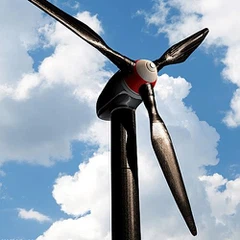
Wind turbine blades are among the largest and most highly engineered composite structures in modern industry. Their ability to capture wind energy efficiently depends heavily on the materials used during manufacturing.
This guide explores the main materials used in wind turbine blades, how they work together, and why advanced composites such as carbon fiber are becoming increasingly important in modern wind energy projects.
Quick Answer
Most wind turbine blades are made from fiberglass-reinforced composites combined with resin systems, core materials, and protective coatings. Larger and more advanced blades may also use carbon fiber in critical structural areas to reduce weight while increasing stiffness and strength.
Why Material Selection Matters for Wind Turbine Blades
Structural Strength Requirements
Wind turbine blades are continuously exposed to wind loads, vibration, and centrifugal forces. The materials must provide sufficient strength to maintain structural integrity during long-term operation.
Weight Reduction Considerations
Lighter blades require less force to rotate and place lower loads on the hub and drivetrain. Advanced composite materials help reduce weight without compromising strength.
Fatigue Resistance Demands
A wind turbine blade may experience millions of load cycles throughout its service life. Materials with excellent fatigue resistance help prevent cracks, delamination, and premature failure.
Long-Term Environmental Exposure
Blades operate in harsh environments, including UV radiation, rain, temperature fluctuations, humidity, and offshore salt exposure. Durable materials help maintain performance over many years.
Impact on Energy Generation Efficiency
Material stiffness directly affects blade shape and aerodynamic performance. Stiffer materials help blades maintain their designed profile, improving energy capture and power output.
Carbon Fiber in Wind Turbine Blades
What Is Carbon Fiber?
Carbon fiber is a high-performance composite reinforcement material made from extremely thin carbon filaments. It is known for its exceptional strength-to-weight ratio, high stiffness, and excellent fatigue resistance. Compared with traditional materials, carbon fiber provides superior structural performance while significantly reducing weight.
Why Is Carbon Fiber Used?
As carbon fiber wind turbine blades continue to increase in length, controlling blade weight becomes increasingly important. Excessive weight can place additional loads on the hub, drivetrain, and tower. Carbon fiber helps address this challenge by providing high stiffness and strength without significantly increasing mass.

Key Benefits of Carbon Fiber
Higher Stiffness
Carbon fiber helps reduce blade deflection under strong wind loads, allowing blades to maintain their designed aerodynamic profile.
Lower Weight
Lighter blades reduce stress on turbine components and improve overall system efficiency.
Excellent Fatigue Resistance
Wind turbine blades experience millions of load cycles throughout their service life. Carbon fiber offers outstanding long-term fatigue performance.
Improved Energy Production
By combining lightweight construction with structural stability, carbon fiber helps modern wind turbines operate more efficiently and generate higher power output.
Fiberglass: The Most Common Wind Turbine Blade Material
Fiberglass is a composite reinforcement material made from fine glass fibers combined with resin systems such as epoxy, polyester, or vinyl ester resin. When molded into blade structures, it forms lightweight yet strong composite components capable of withstanding continuous operational loads.

Why Is Fiberglass Widely Used?
One of the primary reasons fiberglass dominates wind turbine blade manufacturing is its cost-effectiveness. Compared with carbon fiber, fiberglass offers good mechanical performance at a lower material cost, making it an ideal choice for large-scale blade production.
Key Benefits of Fiberglass
Fiberglass provides an excellent strength-to-weight ratio, helping reduce blade weight while maintaining structural stability. It also offers outstanding corrosion resistance, making it suitable for harsh outdoor and offshore environments. In addition, fiberglass demonstrates good fatigue resistance, allowing blades to withstand millions of load cycles throughout their service life.
Resin Systems Used in Wind Turbine Blades
Epoxy Resin
Epoxy resin is widely used in high-performance wind turbine blades because it offers strong bonding, excellent fatigue resistance, and good dimensional stability. It works well with fiberglass and carbon fiber reinforcements, making it suitable for large blades that require higher stiffness and reliability.
Polyester Resin
Polyester resin is a cost-effective option used in some composite blade structures. It is easier to process and offers acceptable mechanical performance for certain applications. However, compared with epoxy, it generally has lower fatigue resistance and bonding strength, so it is less common in demanding large-blade designs.
Vinyl Ester Resin
Vinyl ester resin offers a balance between polyester and epoxy. It provides better corrosion resistance and toughness than standard polyester resin, making it useful in environments where moisture, chemical exposure, or long-term durability are important.
Protective Coatings and Surface Materials
The structural composite materials inside a wind turbine blade provide strength, but the external protection system is equally important for ensuring long-term durability and performance. These protective layers help shield the blade from environmental damage throughout its service life.
Gel Coats
Gel coats form the outermost layer of many wind turbine blades. They create a smooth surface finish while providing protection against weathering, moisture, and minor surface damage.
UV-Resistant Coatings
Long-term exposure to sunlight can gradually degrade composite materials. UV-resistant coatings help protect the blade surface from ultraviolet radiation, slowing the aging process and maintaining structural integrity.
Erosion Protection Systems
The leading edge of a wind turbine blade is continuously exposed to rain, dust, sand, and airborne particles. Specialized erosion protection systems help reduce surface wear and preserve aerodynamic efficiency.
Lightning Protection Components
Wind turbines are often installed in open areas where lightning strikes are a significant risk. Integrated lightning protection systems safely conduct electrical energy away from critical blade structures, helping prevent severe damage.
Moisture Resistance
Over time, moisture intrusion can affect the performance of composite materials. Protective surface layers and sealing systems help prevent water penetration, reducing the risk of internal material degradation and extending blade service life.
Carbon Fiber vs Fiberglass in Wind Turbine Blades
|
Feature |
Carbon Fiber |
Fiberglass |
|
Weight |
Lighter |
Heavier |
|
Stiffness |
Higher stiffness |
Moderate stiffness |
|
Strength-to-Weight Ratio |
Excellent |
Good |
|
Fatigue Resistance |
Excellent |
Good |
|
Blade Length Capability |
Better for longer blades |
Suitable for standard blades |
|
Deflection Control |
Better bending control |
More deflection under load |
|
Energy Efficiency |
Helps improve energy capture |
Reliable but less efficient for very large blades |
|
Cost |
Higher |
Lower |
|
Manufacturing Difficulty |
More demanding process |
Easier and more mature process |
|
Typical Application |
Spar caps, high-load areas, and large offshore blades |
Blade shells, standard onshore blades |
How Modern Wind Turbine Blades Combine Multiple Materials
Modern wind turbine blades are not made from a single material. Instead, they use a composite structure that combines strength, lightweight performance, stiffness, and environmental resistance.
Composite Construction
Most blades combine fiberglass, carbon fiber, resin systems, core materials, and protective coatings. This layered construction allows the blade to remain lightweight while withstanding high wind loads and long-term vibration.
Load-Bearing Spar Caps
Spar caps are the primary load-bearing components of a wind turbine blade. They help resist bending forces during operation. In larger blades, carbon fiber is often used in the spar caps to increase stiffness while reducing overall weight.
Shear Webs
Shear webs connect the upper and lower blade shells. Their function is to transfer internal loads and prevent the blade from twisting or deforming under wind pressure.
Outer Shell Structure
The outer shell gives the blade its aerodynamic shape. It is typically made from fiberglass-reinforced composites because fiberglass offers a good balance of strength, moldability, and cost-effectiveness.
Hybrid Carbon-Fiberglass Designs
Many modern blades use hybrid designs, with fiberglass covering large surface areas and carbon fiber reinforcing high-stress structural zones. This approach helps balance cost, strength, weight, and long-term performance.
Materials Used in Offshore Wind Turbine Blades
Offshore wind turbine blades are typically larger than their onshore counterparts; consequently, the materials used must combine high strength and light weight with excellent long-term stability. To capture more wind energy, offshore turbines generally employ longer blades, necessitating materials with high stiffness and an outstanding strength-to-weight ratio to minimize blade deformation and reduce structural stress. Furthermore, the offshore environment-characterized by saltwater, humid air, and continuous wind loads and vibrations-imposes stringent requirements regarding material corrosion resistance and fatigue performance.
Future Materials for Wind Turbine Blades
As wind turbines continue to increase in size, blade materials must become lighter, stronger, and more recyclable.
Recyclable Composites
Recyclable composite systems are becoming an important focus in the wind energy industry. They help reduce end-of-life waste and make blade recycling more practical and economically viable.
Thermoplastic Materials
Compared with many traditional thermoset resin systems, thermoplastic composites offer superior recyclability. They also support faster manufacturing processes and have the potential to be reshaped or reused at the end of their service life.
Advanced Carbon Fiber Systems
Advanced carbon fiber materials will continue to play a critical role in the development of longer and lighter wind turbine blades. Their high stiffness and low weight help reduce blade deflection and improve structural efficiency.
Sustainable Blade Manufacturing
Future blade production will place greater emphasis on reducing energy consumption, adopting more environmentally friendly resin systems, and improving material utilization to minimize environmental impact.
Lightweight Structural Innovations
New core materials, hybrid fiber structures, and optimized layup designs help blades achieve better strength-to-weight ratios. These innovations support larger wind turbines, increased power generation, and longer service life.
Conclusion
Wind turbine blades rely on a combination of fiberglass, carbon fiber, resin systems, core materials, and protective coatings to achieve long-term strength, stiffness, and durability. Fiberglass remains the most widely used material because of its balanced cost and performance, while carbon fiber is increasingly used in key structural areas to reduce weight and support longer, more efficient blade designs.
FAQ
Q: What material is most commonly used in wind turbine blades?
A: Fiberglass-reinforced composite materials are the most commonly used materials in wind turbine blades. They provide a good balance of strength, durability, weight, and cost, making them suitable for both onshore and offshore wind energy applications.
Q: Why is carbon fiber used in wind turbine blades?
A: Carbon fiber is used to increase stiffness while reducing weight. This allows manufacturers to build longer blades that can capture more wind energy without significantly increasing structural loads.
Q: Are wind turbine blades made entirely from carbon fiber?
A: No. Most wind turbine blades use a combination of materials, including fiberglass, carbon fiber, resin systems, core materials, and protective coatings. Carbon fiber is typically used only in critical structural areas where higher stiffness is required.
Q: What resin is used in wind turbine blades?
A: Epoxy resin is the most widely used resin in modern wind turbine blades due to its excellent bonding strength, fatigue resistance, and durability. Polyester and vinyl ester resins are also used in some applications.
Q: How long do wind turbine blades last?
A: Most wind turbine blades are designed to operate for approximately 20 to 25 years. Actual lifespan depends on environmental conditions, maintenance practices, and material quality.
Q: What is the difference between fiberglass and carbon fiber blades?
A: Fiberglass is more cost-effective and widely used, while carbon fiber offers higher stiffness and lower weight. Carbon fiber is often selected for larger blades where improved structural performance is required.
Q: Why do offshore wind turbines use advanced composite materials?
A: Offshore turbines are typically larger and operate in more demanding environments. Advanced composite materials help improve stiffness, fatigue resistance, corrosion resistance, and long-term durability.
Q: Are wind turbine blades recyclable?
A: Recycling wind turbine blades remains a challenge because they are made from composite materials. However, new recycling technologies and recyclable composite materials are being developed to improve sustainability in the wind energy industry.