

Introduction
Choosing the right carbon rim used to be simple. Today, it isn't. As more riders transition to tubeless systems and wider tires, the debate between hooked and hookless rims has become one of the most contentious topics in modern cycling. Some riders value the familiar sense of security that hooked rims provide, while others are drawn to the clean design and performance potential of hookless rims.
In reality, choosing the right wheel system isn't about following trends. It's about finding the setup that best matches how you ride and where you ride.

What Is a Hooked Rim?
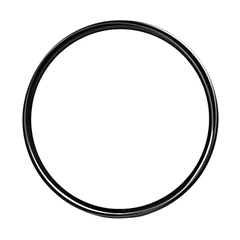
The hooked rim is a traditional and well-established rim design that has been used on road and gravel bikes for decades. Its defining feature is a small hook-shaped lip along the inner edge of the rim. This hook plays a crucial role in securing the tire in place.
Traditional Hooked Design
The hook forms a mechanical lip that locks the tire bead firmly onto the rim. This design was originally developed for clincher tires and was later refined to work reliably with tubeless systems as well, providing a secure and proven tire interface.
Compatible with Clincher and Tubeless Tires
Hooked rims are highly versatile. They can safely accommodate a wide range of clincher tires as well as many tubeless options, making them a flexible choice for riders who value broad compatibility and easy installation.
Higher Pressure Tolerance and Safety Margin
One of the key advantages of hooked rims is their ability to handle higher tire pressures. The hook adds an extra layer of security, which is especially important for narrower road tires or heavier riders who prefer higher inflation pressures.
Why Are Hooked Rims Still Widely Used?
Hooked rims remain popular because they are forgiving, familiar, and reliable. They support a wider variety of tire types and allow for greater flexibility in tire pressure, giving riders confidence and peace of mind across different riding conditions.
What Is a Hookless Rim?

Straight Sidewall Design
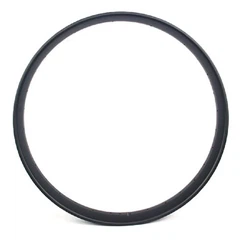
A hookless rim features a straight sidewall design with no "hooked" bead at the tire seat. Instead of relying on a mechanical hook to retain the tire, it uses a precisely engineered bead seat and sidewall geometry. When the tire is inflated and correctly seated, the bead locks into place through an accurate dimensional fit rather than a hooked edge.
How It Works in Real-World Riding
On a hooked rim, the bead hook helps secure the tire under pressure. On a hookless rim, tire retention depends on the correct match between the rim's bead seat diameter and the tire's bead shape. When this match is precise, the tire remains stable and securely seated during riding.
Why Hookless Rims Are Mainly Designed for Tubeless Tires
Hookless rims are built around modern tubeless concepts: wider tires, lower operating pressures, and improved air retention. Tubeless tires use stronger beads with tighter dimensional control, which is exactly what hookless rims require. Traditional clincher tires vary more in size and are not designed for this interface, which is why hookless rims are typically limited to certified tubeless tires.
ETRTO Standards and Dimensional Precision
The safety of hookless rims depends on established standards, particularly ETRTO guidelines, which define bead seat dimensions and maximum pressure limits. In practice, this means rims must be manufactured to strict tolerances, and tires must be clearly approved for hookless use.
Hooked vs Hookless Rims – Key Differences
|
Item |
Hooked Rims |
Hookless Rims |
|
Tire compatibility |
works with clincher tires and tubeless/tubeless-ready setups (with or without tubes). |
typically only supports hookless-approved tubeless tires. |
|
Approved tire types |
Clincher + tubeless + tubeless-ready tires |
Hookless-approved tubeless tires |
|
Maximum tire pressure limits |
Generally allows higher pressures, suitable for narrower tires, higher-pressure setups, or heavier riders. |
Stricter pressure caps per standards and brand limits, typically optimized for wider tires and lower pressures. |
|
Weight & manufacturing consistency |
A more complex rim edge may add slight weight, but it's more forgiving of tire size variation. |
A simpler profile can reduce rim-edge weight, but demands tighter dimensional precision and consistency. |
|
Ease of installation & maintenance |
Easier installs and more forgiving fit, great for frequent tire changes or mixing brands. |
Requires approved tire matching, careful seating, and staying within pressure guidelines. |
|
Typical use cases |
High-pressure road use, racing/training, frequent tire swaps, or riders wanting maximum compatibility. |
Modern tubeless setups, wider road tires, gravel/endurance riding, for riders prioritizing lower pressures and stable tubeless performance. |
Hooked vs Hookless Rims: Which Is Right for You?
Hooked Rims:
Hooked rims use a traditional bead hook to physically secure the tire in place. This design is compatible with a wide range of tire types, including clincher and tubeless tires, and it generally allows for higher tire pressures. If you run narrower tires, prefer higher pressures, or frequently switch between different tire brands and setups, hooked rims offer greater flexibility and reliability.
Hookless Rims:
Hookless rims feature straight sidewalls and rely on precise rim and tire dimensions to hold the tire securely. When paired with hookless-approved tubeless tires, they provide excellent stability, lower rolling resistance, and a smoother ride feel. Hookless rims are especially well-suited for wider tires, lower pressures, and gravel or endurance riding, where comfort and traction matter more than maximum tire pressure.
Which One Should You Choose?
If you want broader tire compatibility and higher pressure capability, hooked rims are likely the better option. If you run tubeless-only setups and prioritize modern performance with wider tires, hookless rims may be the right choice. There is no absolute "better" option-only the rim that best matches your riding style, tire selection, and performance goals.
FAQ
Q: What are the main differences between hooked and hookless rims?
A: The main difference lies in the design of the rim sidewalls. Hooked rims have a small hook-like protrusion that helps hold the tire in place; hookless rims, on the other hand, use straight sidewalls, relying on precise rim and tire dimensions to hold the tire in place.
Q: Are hookless rims suitable for road bikes?
A: Yes, hookless rims are safe when used correctly. They must be used with tubeless tires that meet hookless rim standards, and the tire pressure must be within the recommended range.
Q: Can hookless rims be used with clincher tires?
A: No. Hookless rims are primarily designed for tubeless tires that meet specific standards. Traditional clincher tires are not suitable and should not be used on hookless rims.
Q: Do hooked rims allow for higher tire pressures than hookless rims?
A: Generally, yes. Hooked rims typically support higher maximum tire pressures, which is very advantageous for narrower road tires or heavier riders who prefer higher tire pressures.
Q: Why do many modern carbon fiber rims use a hookless design?
A: Hookless designs allow for more consistent manufacturing processes, improve rim edge strength, and increase the inner width of the rim.
Q: Which is better for gravel riding: hook-on or hookless rims?
A: Hookless rims are generally the preferred choice for gravel riding because gravel riding typically uses lower tire pressures and wider tires, which align well with the standards of hookless rims.
Q: Which type of rim is better for riders who frequently change tires?
A: Hook-on rims are generally more forgiving and compatible with a wider variety of tires, making them a better choice for riders who frequently change tires or use different tire brands.
Conclusion
Both hook-on and hookless rims are proven designs, each developed for different riding styles and tire technologies. Hook-on rims offer wider tire compatibility and a greater range of tire pressure adjustments, making them a reliable choice for riders who value versatility and ease of installation. Hookless rims, on the other hand, are designed specifically for modern tubeless tire systems, featuring more precise manufacturing processes, a wider inner width, and a superior riding experience when paired with compatible tires.