

Introduction
performance, but choosing the right one requires careful consideration of crank length, spindle standard, bottom bracket compatibility, chainring setup, and riding style.
This guide explains the key factors to evaluate and the specifications to compare before ordering.
Quick Answer
To choose the right carbon fiber crank, focus on compatibility before weight. Check the crank length, spindle diameter, bottom bracket standard, and chainring interface to ensure they match your bike and drivetrain. Then consider your riding style, stiffness requirements, and future upgrade plans. If you're buying for an OEM project, provide your bike type, drivetrain specification, and target requirements for accurate product selection.
What Is a Carbon Fiber Crank?
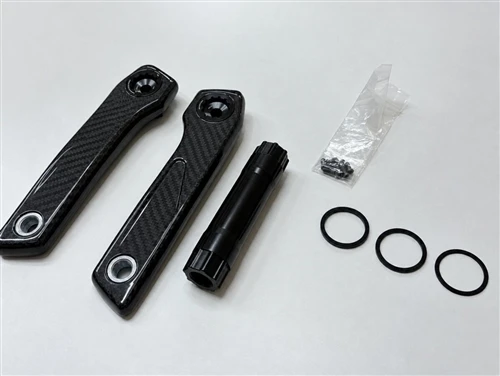
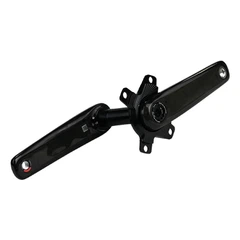
The crank arm is the left or right arm that connects the pedal to the spindle. A crankset is the complete assembly, typically consisting of the crank arms, spindle, and chainring(s).
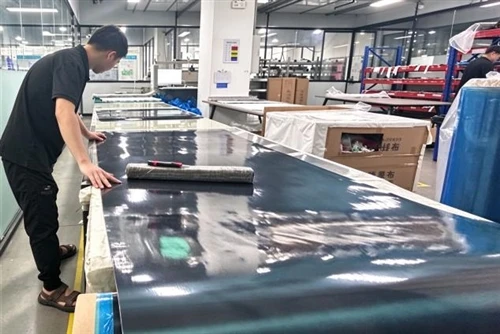
Carbon fiber cranks are made by layering carbon fiber with resin and curing the material under controlled conditions. This manufacturing process allows engineers to optimize the fiber layup in different sections of the crank, achieving the right balance of weight, stiffness, and strength for specific riding applications.

Send Inquiry Now

Send Inquiry Now

Send Inquiry Now

Send Inquiry Now

Why Choose a Carbon Fiber Crank?
Many riders choose a carbon fiber crank for its combination of low weight, high stiffness, and modern design. Another advantage is its design flexibility, allowing manufacturers to optimize the crank's shape, carbon layup, and appearance to suit different riding styles and performance requirements.

Choose the Right Crank Length
Crank length affects your pedaling circle, joint angles, cadence, and how easily you can generate power. A crank that is too long may increase knee and hip flexion, while one that is too short can change leverage and pedaling feel.
165 mm: Commonly used by shorter riders, high-cadence cyclists, and bikes that require greater pedal clearance.
167.5 mm: A middle option between the most common crank lengths.
170 mm: A widely used size for road, gravel, and mountain bikes.
172.5 mm: A common choice for medium to large road bikes and many average-to-tall riders.
175 mm: Often preferred by taller riders or for riding styles that benefit from additional leverage.
There is no universal "best" crank length. The right choice is the one that matches your body dimensions, bike setup, and riding style while allowing a comfortable and natural pedaling motion.
Check Bottom Bracket and Spindle Compatibility
Before purchasing a carbon fiber crank, confirm the frame's bottom bracket standard, spindle diameter, and bottom bracket shell dimensions. Different systems may require specific bottom brackets, bearings, or spacer setups.
BB30 / PF30: Usually designed for 30 mm spindles, with different bearing installation methods.
BSA: A common threaded standard that can support different spindle sizes with the correct bottom bracket.
T47: A large threaded standard using replaceable bearing cups.
DUB: SRAM's 28.99 mm spindle standard.
24 mm spindle: Commonly used with Shimano and compatible crank systems.
Do not choose a crank based only on the bottom bracket name. Check the shell type and width, spindle length, bearing size, and spacer requirements to reduce installation and compatibility problems.
Match the Crank to Your Riding Style
Road Cycling
Climbing riders usually focus on low weight. Endurance riders need a balance of comfort, reliability, and suitable crank length, while racing setups place greater emphasis on stiffness and direct power transfer.
Mountain Biking
XC cranks focus on low weight and pedaling efficiency. Trail riding requires a better balance between weight and impact resistance, while Enduro riders should give more attention to strength and durability.
Gravel Riding
Gravel cranks need to handle mixed surfaces, mud, dust, and repeated vibration. Check durability, chainring compatibility, and clearance between the crank, frame, and wider tires.
E-Bikes
E-bike cranks must handle the higher torque produced by both the motor and rider. Check the crank arms, spindle interface, and mounting structure, and confirm that the crank is designed for e-bike use.
Evaluate Weight vs. Stiffness
A lighter crank is not always the better choice. Removing too much material to reduce weight can increase flex under heavy loads, making the crank less suitable for heavier riders or those who produce high pedaling forces.
Compare the stiffness-to-weight ratio: Focus on how well the crank balances low weight with structural stiffness. A slightly heavier crank with a stronger design may deliver a more direct pedaling feel than an ultra-light model.
Consider rider weight: Heavier riders generally place greater loads on the crank arms and spindle, making reinforced carbon layups or higher-load designs a better fit.
Match your riding style: Sprinters and racers often prefer higher stiffness for hard acceleration, while endurance riders may value a balance of weight, comfort, and long-distance efficiency.
Look at the overall design: Crank arm shape, carbon layup, spindle interface, and pedal insert construction all influence stiffness and durability. Weight alone does not reflect real-world performance.
Look at Carbon Construction Quality
Carbon Fiber Grade
The fiber grade affects the crank's strength, stiffness, weight, and cost. High-modulus carbon fiber is typically used in key load-bearing areas rather than throughout the entire crank.
Layup Design
The fiber orientation, layer count, and placement should match the expected loads. Proper layup reinforces the pedal eye, spindle interface, and other high-stress areas without adding unnecessary material.
Manufacturing Process
Stable control of temperature, pressure, curing time, and resin content helps reduce voids, wrinkles, and uneven wall thickness. These process details are a better indicator of quality than weight alone.
Mold Accuracy
Precision molds help maintain accurate crank length, alignment, and interface dimensions, reducing fitment issues and variations between the left and right crank arms.
Bonding Quality
Carbon fiber and metal inserts should be bonded evenly and fully cured. Gaps, excess adhesive, or loose inserts may indicate poor manufacturing control.
Surface Finish
In addition to a smooth appearance, check for pinholes, resin-rich areas, exposed fibers, uneven edges, or visible repair marks.
Quality Inspection
Confirm that the supplier inspects dimensions, weight, bonding areas, surface condition, and structural performance. For OEM projects, test reports, inspection records, and sample approval are also important.
Check Chainring Compatibility
Direct Mount vs. BCD: Direct-mount chainrings attach directly to the crank, resulting in a cleaner and lighter design. BCD chainrings use bolts and require the correct bolt circle diameter to match the crank spider.
Single vs. Double Chainring: Single-chainring setups are common on mountain, gravel, and some road bikes. Double-chainring cranks offer a wider gear range but require compatible front derailleurs, a suitable chainring spacing, and adequate frame clearance.
Chainline: An incorrect chainline can cause poor shifting, drivetrain noise, and faster wear. Standard, Boost, and road chainlines are generally not interchangeable.
Shimano and SRAM Compatibility: Check the mounting interface, chainring offset, speed compatibility, and tooth profile. Even if the speed is the same, Shimano and SRAM chainrings are not always cross-compatible.
Future Upgrades: Choosing a common BCD or widely supported direct-mount standard makes it easier to change chainring sizes or upgrade your drivetrain later.
Conclusion
When choosing a carbon fiber crank, consider more than weight. Check the crank length, spindle and bottom bracket standards, chainring compatibility, and intended riding use.
Before ordering, confirm the frame and drivetrain interfaces. For OEM or custom projects, provide the bike type, required specifications, target weight, and order quantity to improve product selection and reduce compatibility issues.
FAQ
Q: Which bottom bracket standard does it fit?
A: Compatibility depends on the spindle and crank model. Common options may support BSA, BB86, BB92, PF30, BB30, or DUB-type systems with the correct bottom bracket.
Q: Which spindle diameter is included?
A: Available spindle diameters vary by model. Confirm whether your setup requires 24 mm, 28.99 mm, or 30 mm before ordering.
Q: What crank lengths are available?
A: Common crank lengths include 165 mm, 170 mm, 172.5 mm, and 175 mm. Other lengths may be available for OEM projects.
What chainring standards are supported?
Q: Options may include direct-mount and BCD chainrings for single or double setups. The exact interface should be confirmed with your drivetrain.
A: Is OEM customization available?
Yes. OEM options may include crank length, carbon layup, spindle specification, chainring interface, finish, logo, and packaging.
Q: What testing has been completed?
A: Testing may include fatigue, impact, stiffness, dimensional, and interface checks. Test methods and reports depend on the crank model and project requirements.
Q: Can replacement parts be supplied?
A: Replacement spindles, bolts, preload rings, washers, and other small parts may be supplied based on the crank design.
Q: What warranty is offered?
A: Warranty terms depend on the product model, application, and order agreement. Coverage should be confirmed before placing the order.