





Introduction
Dear cycling enthusiasts, have you ever wondered why some riders favor quick-release levers while others insist on thru-axles? With the rise of carbon fiber wheelsets and disc brake systems, choosing the right axle type has become crucial. Quick-release levers are lightweight and easy to use, while thru-axles offer unparalleled stability and rigidity. Did you know that modern high-end bicycles are increasingly adopting thru-axles to enhance performance and safety?
What Is a Quick-Release Skewer?
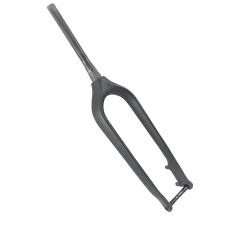
While quick-release mechanisms appear simple, they incorporate ingenious design. They typically consist of a threaded rod, a quick-release lever, a nut, and two conical springs. When you release the quick-release lever, the conical springs expand outwards, reducing the pressure between the lever and the nut, allowing for easy wheel removal. When you tighten the lever, the conical springs compress, and the lever grips the nut tightly, securing the wheel firmly to the frame. Forks and rear forks using quick-release mechanisms usually have a U-shaped dropout, which acts like a flexible clamp, allowing the quick-release lever to pass through and secure the wheel, making wheel installation and removal quick and easy. Quick-release levers allow riders to remove or install wheels in seconds-ideal for quick repairs, transport, or race-day adjustments.

Typical Standards and Sizes:
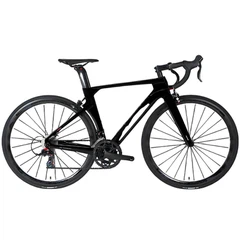
Road bikes typically use quick-release levers with a 100mm front axle/130mm rear axle.
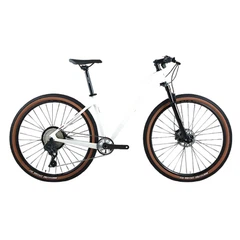
Mountain bikes typically use quick-release levers with a 100mm front axle/135mm rear axle, but older models may differ. The quick-release lever is compatible with most traditional fork shifters and rear frames designed specifically for quick-release systems.

What Is a Thru Axle?
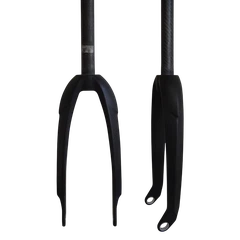
A thru-axle is a component fixed to the frame via a core and a cup. The cup is typically welded to the frame, forming a single, integrated structure. The core connects to the hub via threads, a tight connection that allows the thru-axle to remain stable under significant pressure and impact. Thru-axles have closed fork bores, lacking the U-shaped dropouts of quick-release systems. This design effectively reduces the possibility of wheel slippage. Unlike traditional quick-release levers that rely on camshafts, thru-axles provide precise engagement, eliminating wheel wobble and improving overall bicycle stability.

Standard Sizes and Compatibility
Thru-axles are available in various diameters and lengths, typically 12mm or 15mm for front wheels and 12mm or 17mm for rear wheels. Their design conforms to modern frames and forks, and is particularly suitable for bicycles equipped with disc brakes and carbon fiber components. Ensuring the correct axle size is crucial for proper alignment and optimal performance.
Core Differences Between Quick Release and Thru Axle
Structural Design
Quick Release:
A quick-release system uses a thin skewer, typically about 5 mm in diameter, that relies on a cam and lever mechanism for fast installation and removal. One end of the skewer features a lever, while the other end has a nut. Conical springs in the middle provide clamping pressure, and the wheel is held in place by open U-shaped dropouts on the front fork or rear stays.
Thru Axle:
A thru axle is a closed, integrated fixing system consisting of an axle shaft and axle interfaces. The axle threads directly into the hub or frame, while the frame or fork features closed dropout holes without U-shaped slots. This creates a more rigid, unified structure between the wheel and the frame.
Installation Precision
Quick Release:
Because quick-release systems rely on dropout clamping and elastic tension, slight variations in wheel positioning can occur during each installation. Over time or after repeated removal, this can lead to minor alignment inconsistencies-especially with disc brakes-often resulting in brake rotor rub.
Thru Axle:
Thanks to its threaded connection and closed dropout design, a thru axle ensures the wheel returns to the exact same position every time it is installed. This provides precise wheel alignment, significantly reduces the risk of rotor rub, and is particularly well-suited for disc brake systems where alignment accuracy is critical.
Strength and Stability
Quick Release:
With a relatively small axle diameter (around 5 mm), quick-release skewers are more susceptible to bending or flex under high impact or torsional loads. As a result, they are better suited for lighter riding conditions or scenarios with lower strength requirements.
Thru Axle:
Thru axles typically measure 12 mm, 15 mm, or even 20 mm in diameter, allowing them to withstand much higher loads and impacts. They resist twisting and bending forces more effectively, offering superior stiffness and stability-making them ideal for high-intensity riding, off-road use, and downhill applications.
Convenience
Quick Release:
One of the main advantages of quick-release systems is tool-free operation. Wheels can be removed or installed quickly and easily, making them convenient for roadside repairs or situations that require frequent wheel changes.
Thru Axle:
Installing or removing a thru axle usually requires a specific tool, such as a hex key or Torx wrench, which makes the process slightly more time-consuming. Some thru axles include integrated levers to improve convenience, but overall, they are still less quick than traditional quick-release systems.
Compatibility and Interchangeability
Quick Release:
Quick-release skewers are relatively standardized, and in many cases, skewers from different brands can be used interchangeably, provided the length and axle diameter are compatible.
Thru Axle:
Thru axles come in a wide range of specifications, including axle diameter, thread pitch, thread length, and overall length. Because these dimensions vary between frames and hubs, compatibility is more limited, and the correct thru axle must be selected based on specific frame and hub requirements.
| Feature | Quick Release | Thru Axle |
| Fixing method | Clamp lever & skewer | Threaded solid axle |
| Tool requirement | No tools | Usually needs a hex key |
| Stiffness | Moderate | Very high |
| Weight | Lighter | Slightly heavier |
| Compatibility | Older frames & rim brakes | Modern disc & carbon frames |
Making the Right Choice for Your Bike
Road Cycling Enthusiasts:
If you primarily ride on flat roads, prioritizing speed and lightweight design, quick-release axles are undoubtedly your best choice. Lightweight and easy to install and remove, they handle even minor bumps with ease, allowing you to fully enjoy your ride.
Low-Intensity Off-Road Riding:
Quick-release axles are also suitable for simple XC off-road riding. Their flexibility and convenience allow you to handle various situations more freely in complex terrains.
High-Intensity Mountain Bike Riding (AM, FR, DH, etc.):
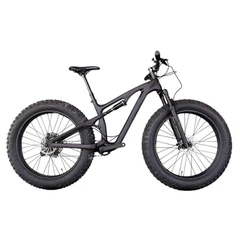
If you enjoy excitement and frequently challenge yourself with difficult terrain, then thru-axles are your "best partner." Thru-axles provide strong rigidity and stability, ensuring your wheels are secure and reliable in various complex road conditions, allowing you to ride with peace of mind and unleash your riding passion.

Compatibility Considerations for Carbon Fiber Wheels
Why Axle Selection is So Important:
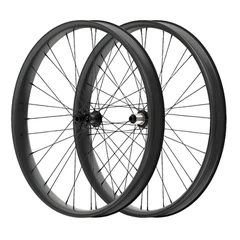
Choosing the right axle is crucial for carbon fiber wheelsets. Carbon fiber wheelsets are lightweight yet robust, and incompatible axles can lead to wheel misalignment, uneven load distribution, or reduced braking performance. Using the correct axle ensures that your carbon fiber wheelset achieves optimal efficiency, safety, and lifespan.
Impact on Hub Engagement and Wheelset Alignment:
Thru-axles provide a precise and tight connection between the hub and frame, reducing lateral deformation and ensuring stable hub engagement. While quick-release levers are convenient, slight movement can occur under high torque or braking, affecting wheelset alignment and overall riding stability. Proper axle selection ensures your carbon fiber wheelset maintains its intended performance characteristics, including responsive handling and smooth rolling.
Choose Based on Personal Needs
For Convenience and Self-Maintenance:
If you frequently need to adjust your bike's condition or perform repairs yourself, quick-release axles are the best choice. Tool-free quick installation and removal allow you to complete operations in a short time, saving time and effort. Even in areas without professional repair shops, you can easily handle various unexpected situations.
Prioritizing Safety, Stability, And Heavy Load Capacity:
If you value wheel safety, or ride for extended periods and handle heavy loads, thru-axles are a better fit. Their robust construction and high safety ensure wheel stability, eliminating worries about loosening or detachment, and safeguarding your ride.
Conclusion
Quick-release and thru-axle systems each have their advantages and disadvantages. Quick-release systems are convenient and lightweight, while thru-axles offer rigidity and stability. When choosing, you should consider your riding scenario and personal needs. If convenience is your priority, choose quick-release; if performance and safety are your priorities, choose thru-axles.
FAQ
Q: Can you explain how a quick-release skewer works on a bicycle wheel?
A: A quick-release skewer utilizes a lever and cam mechanism to securely clamp the wheel into the bike frame without the need for tools. You flip the lever open to remove the wheel and close it to secure it again. It's light, fast, and perfect for riders who often transport or maintain their bikes.
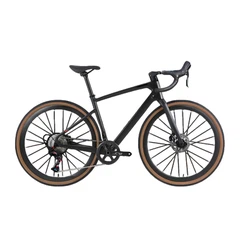
Q: How do I choose the right axle for my bike? Choosing the right axle depends primarily on the type of bicycle, riding style, and frame construction: Road bikes or daily commuter bikes: quick-release and lightweight; Mountain bikes, Gravel bikes, or disc brake bikes: thru-axles offer superior rigidity and stability.
A: Before purchasing, be sure to confirm that the hub spacing matches the frame opening size.
Q: What are the advantages of using a thru-axle compared to a quick-release system?
A: Thru-axles offer advantages in rigidity, brake alignment, and safety. It prevents the wheelset from deforming under stress, improving handling performance on downhill slopes and cornering. Currently, most carbon fiber wheelsets and disc brake systems use thru-axles as the mainstream configuration.
Q: Are thru axles compatible with all carbon fiber wheels?
A: Not all carbon wheels are thru-axle ready. Check the hub spacing, axle diameter, and dropout type. Many top manufacturers...


